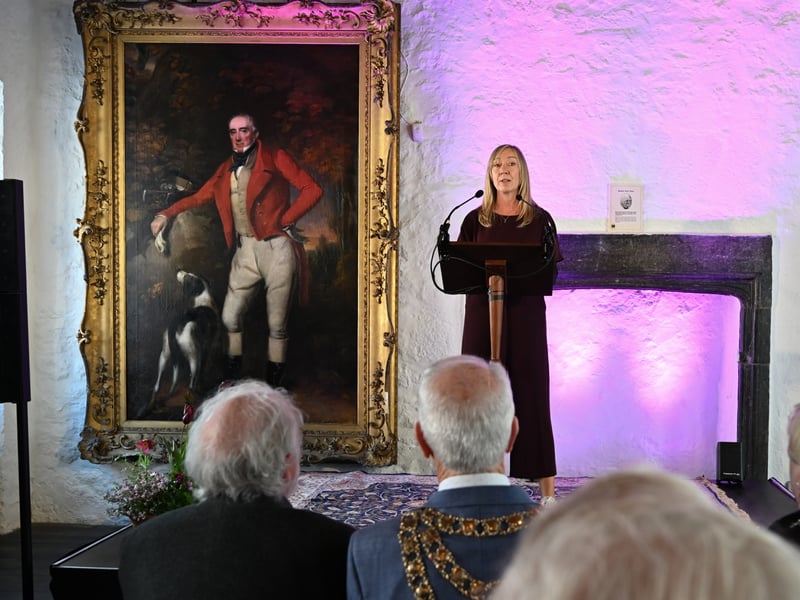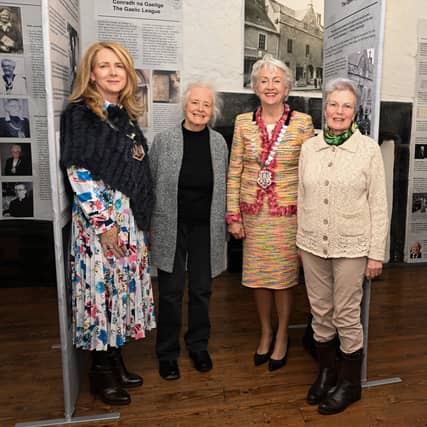


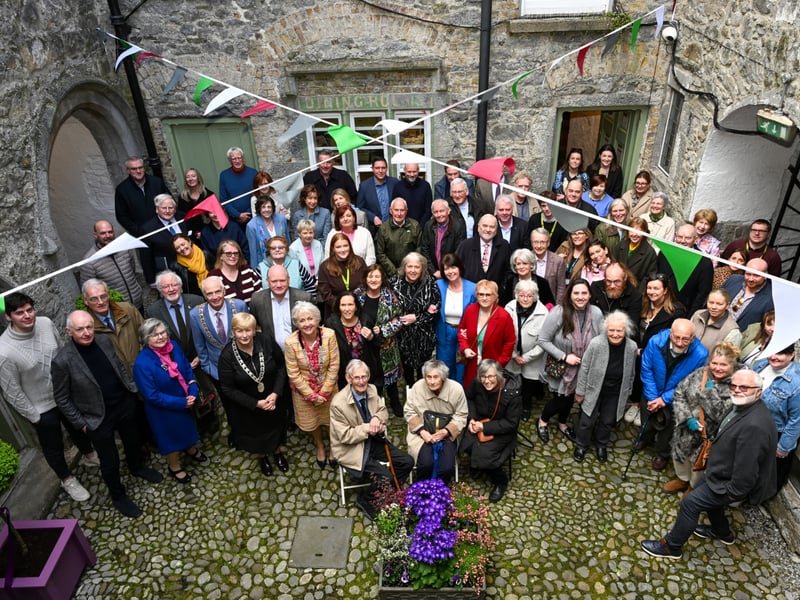
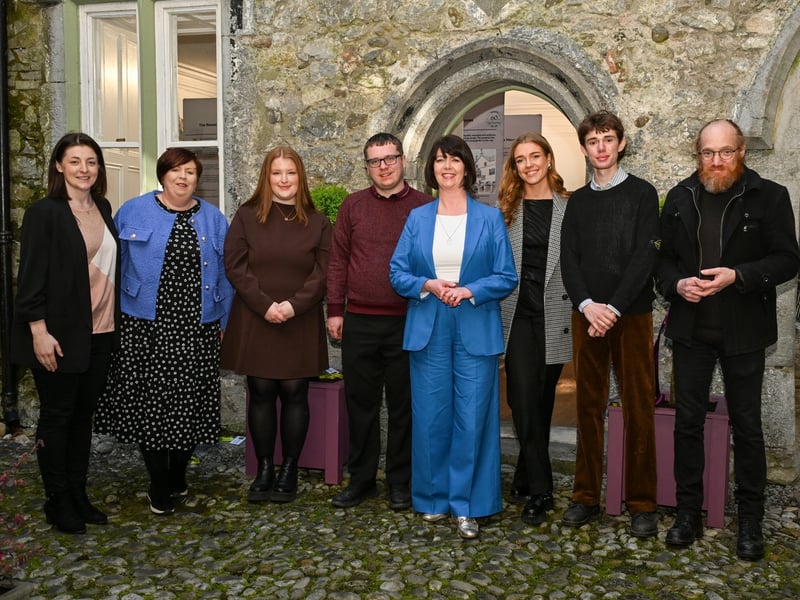
There were many poignant moments at Rothe House on Friday as the famous tourist attraction marked a key moment in its history.
Chief among them, the reading of a beautiful poem composed by the late Louis Feeley, read by his daughter Alma. Louis moved to Kilkenny in 1962 when he came to establish the National Monuments Service of the Office of Public Works (OPW). His first project was the restoration of Rothe House.
The building has been a landmark on Parliament Street in Kilkenny since 1594, when it was built by prominent merchant, John Rothe Fitz Piers, and his wife, Rose Archer. But in the 1960s it could have been lost to us.
Pictures by Vicky Comerford
General manger of Rothe House Valerie O’Sullivan addressed a packed Great Hall, welcoming many familiar faces to the historic merchant mansion for the special anniversary event. It was 60 years to the day when Rothe House first opened its doors to the public as a visitor attraction – the culmination of four years’ hard work.
Chairperson of Rothe House Trust, Ann Mulrooney, launched the Rothe House Strategic Plan 2026-2031, aimed at securing the building’s future. She described how, in the early 1960s, a group of visionary members of the Kilkenny Archaeological Society set out to buy what was fast becoming a ruin. Led by chairperson (and later Freeman of Kilkenny) Margaret Phelan, they launched a major fundraising campaign.
Their aim was to restore the ancient house to its former glory, at a time when restoration was not the norm.
The Society’s fundraising campaign was not only a local one, but a national and international effort. Letters were sent far and wide, with people like the Princess of Monaco, and the Duchess of Westminster among those to send money towards the Rothe House fund.
The first of the three buildings at Rothe House opened on April 17, 1966. A contemporaneous account of that day, written by the late Maureen Hegarty, was also read to the delight of those assembled.
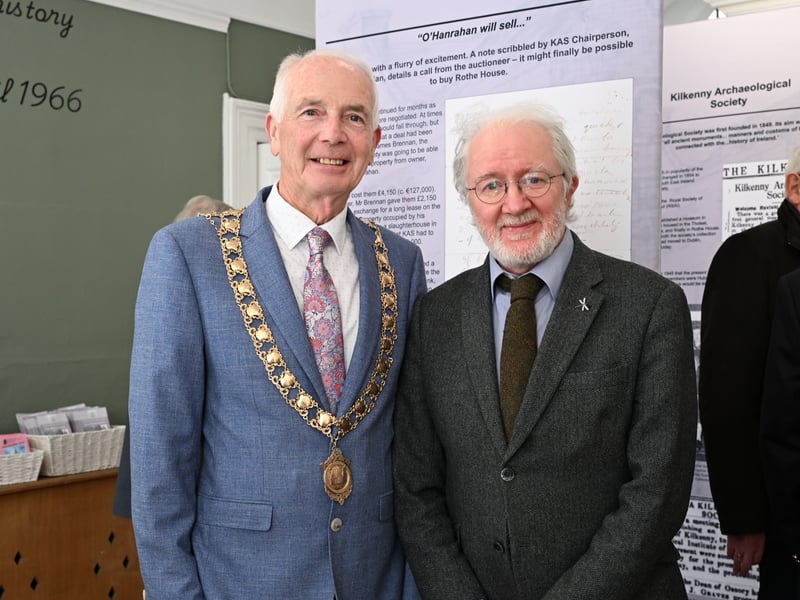
The ribbon was then officially cut on the new free exhibition, ‘Rothe House 1966-2026: The Restoration’. The six-month exhibition is open to the public, with more events planned later this year.
1.
2.
3.