

Irish premier defends Europe’s response to Russia’s invasion of Ukraine
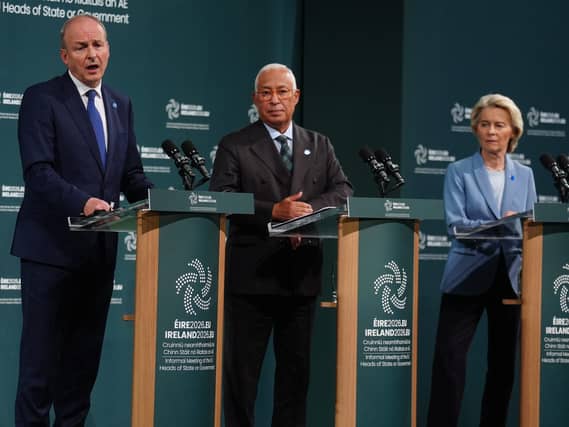

Micheál Martin was speaking as the informal meeting of the EU Council in Dublin came to a close.
Ireland’s premier has defended Europe’s response to Russia’s full-scale invasion of Ukraine, saying it has been “very strong”.
Micheál Martin said that Europe has “stood up” and made clear that the war is having a “profound” impact on the eastern flank of the European Union.
Mr Martin was speaking as an informal meeting of the EU Council in Dublin on Friday drew to a close.
Russian President Vladimir Putin’s war on Ukraine dominated proceedings as EU leaders gathered for a second day of events in the Irish capital.
Earlier on Friday, Latvian Prime Minister Andris Kulbergs said that Europe is larger than Russia, adding that Europe has “to grow some bigger balls”.
In response, Mr Martin said that Europe can be overly self-critical about itself.
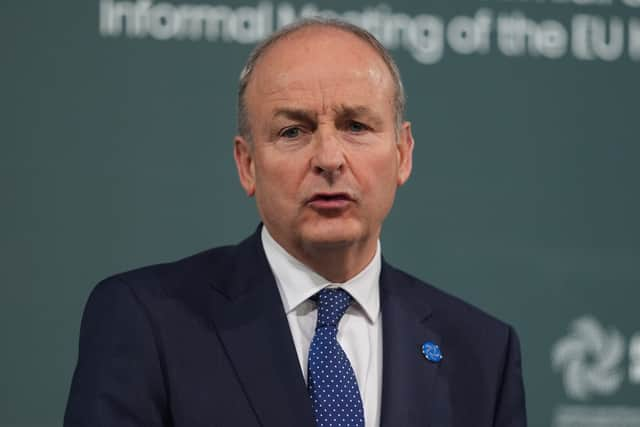
“I think the European Union has been very strong in response to the Russian invasion of Ukraine,” he added.
“If you think about it, in terms of sanctions, 21 sanctions packages. We put another 1,600 on entities and individuals on a list recently.
“A huge financial package of 90 billion last year agreed, and on numerous fronts, individual member states have been very supportive.
“We don’t get any sense yet that Russia is serious about peace, so I think Europe has been very strong and will remain strong.
“I think sometimes Europe can be overly self-critical about itself.”
His comments came as leaders decided who will represent the continent in Ukraine peace talks.
At the end of the summit, European Council president Antonio Costa said four member states, the United Kingdom and representatives from the EU institutions should form Europe’s presence in negotiations involving Russia, Ukraine and the US.
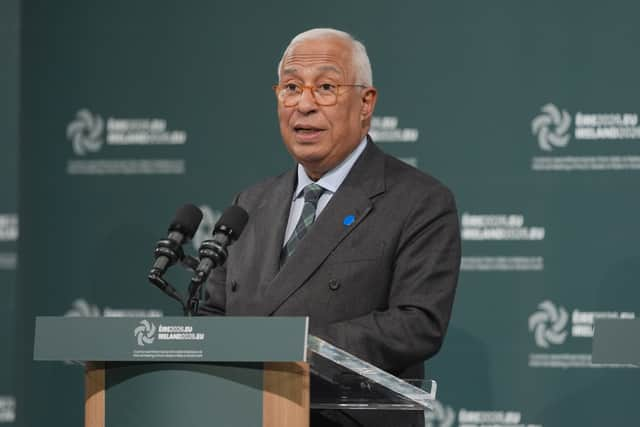
He said European leaders agreed that the bloc’s team for the negotiations on peace in Ukraine is “the European Union institutions and the E5 of the coalition of the willing”.
The E5 countries are France, Germany, Italy, Poland and the United Kingdom.
Senior EU diplomat Kaja Kallas told reporters in Dublin she should be involved in representing Europe in foreign and security matters.

During a press conference on Friday evening, Mr Costa said it was “normal” to have a team representing Europe on issues affecting the bloc.
“First of all, we are supporting all peace efforts since the very beginning, and namely the peace efforts led by President (Donald) Trump,” Mr Costa said.
“Now, apparently, we have a new momentum to move forward in the peace negotiations and we are fully engaged to support these peace negotiations.
“For this, of course, we need to work as a team – like all the other parts are acting as a team.”
He added: “We have, of course, the coalition of the willing that is essential when it comes to ensure security guarantees to Ukraine after a peace agreement, and of course we need to integrate all of us.
“For this, it’s essential to have a team and to speak with only one voice and is what we agreed to do, and is how we are working. This we will continue.
“Regarding the EU institutions, the treaty is very clear. The president of the European Council represents the European Council and represents the union when it comes to the common foreign and security policy at the level of head of state and head of governments, and the president of the European Commission represents the commission.”
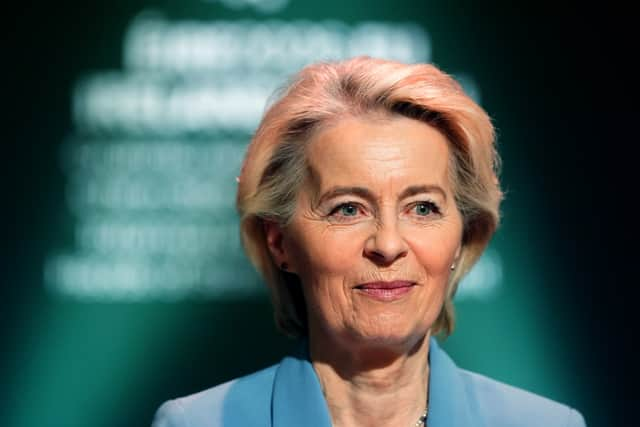
Speaking alongside Mr Costa, European Commission president Ursula von der Leyen said the “path to peace” in Ukraine will not be easy.
“The best way to get Russia to the table is to keep up our support for Ukraine and to keep maximum pressure on Russia,” she added.
“This is why we will soon propose our 22nd package of sanctions, and before the next European Council, the commission will come forward with a proposal to close the financing gap in Ukraine for 2027.
“Let me be clear: the path to peace will not be easy but we will remain united – as we’ve been over the last five years – in our support for Ukraine and with the end goal clear in our minds.”
On Thursday, US special envoy Jared Kushner indicated that Mr Putin was willing to accept European involvement in the process. However, subsequent comments from the Kremlin suggested Moscow has yet to approve European participation.
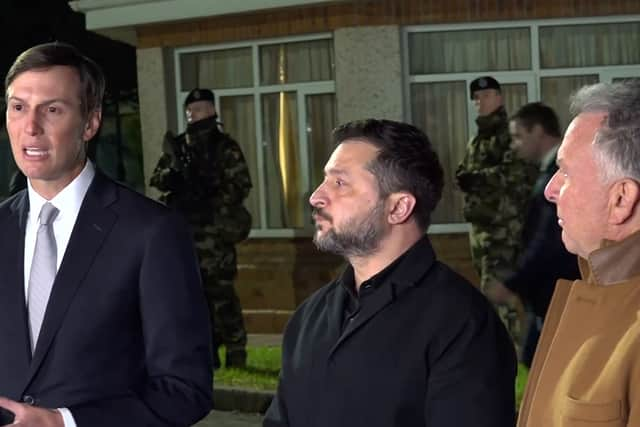
Mr Kushner, who is Donald Trump’s son-in-law, was speaking after he and fellow US envoy Steve Witkoff held talks with Ukrainian President Volodymyr Zelensky at a Dublin military airbase – discussions that took place shortly after Mr Trump’s representatives held a similar meeting with Mr Putin in Moscow.
The exchanges followed talks involving the US envoys and delegations from Ukraine and Russia in Abu Dhabi earlier in the week – negotiations that did not make substantive progress towards ending the conflict but did see the warring sides agree to a significant prisoner release deal.
Dublin became a focal point for deliberations around efforts to end the war this week because of the city’s hosting of two major political meetings across two days.
EU leaders also convened in the Irish capital on Thursday when they were joined by a range of other allies and partners, including UK Prime Minister Andy Burnham and Canadian Prime Minister Mark Carney, for a meeting of the European Political Community (EPC).
Dublin hosted the EPC summit and Friday’s informal meeting of the EU Council as part of Ireland’s six-month presidency of the EU Council.
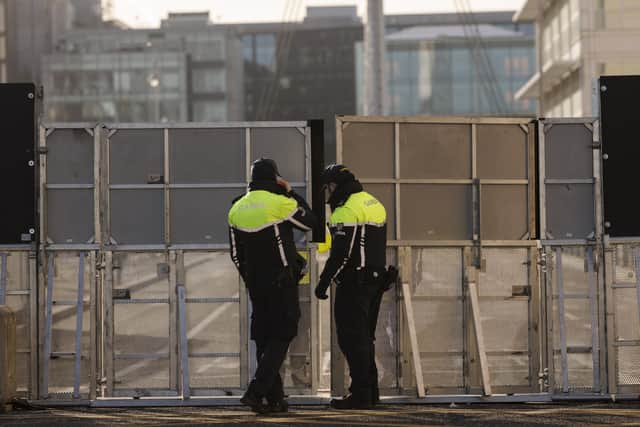
The major back-to-back political gatherings saw the Irish authorities roll out the biggest security operation in the history of the state.