

Chamber CEO speaks SUMP, Kilkenny tourism, and N24 upgrade
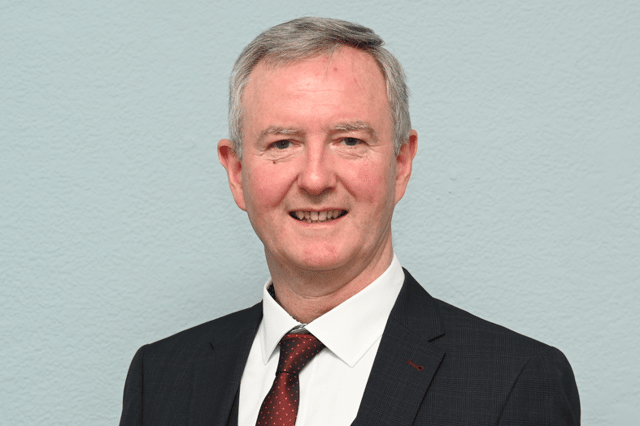

‘I don’t think anybody would disagree – there’s very little shopping done by people sitting in their cars’
“Over the weeks and indeed months and years of the SUMP, there has been reference to, you know, the possibility of – how would it work for High Street, for example, if it became another version of Grafton Street in Dublin?
“And that’s an impossible question to answer with any degree of certainty [...] what will work in one place might not necessarily work in the other at all,” said John Hurley, CEO of the Kilkenny Chamber of Commerce.
Mr Hurley was speaking after the Sustainable Urban Mobility Plan (SUMP) was recently approved by Kilkenny County Council.The plan seeks to reduce car dependency in Kilkenny City and build infrastructure to encourage alternatives like cycling, walking and public transport. On the day of the vote, two amendments were adopted by the council after sustained consultation with, among others, the Kilkenny Chamber of Commerce, the county’s business representation organisation whose membership includes Glanbia, State Street, Abbott and hundreds of sole traders.
The first amendment was an acknowledgment by the council that the sequencing of the plan’s measures are essential to its success.
“The key message that came back to us from the town hall meetings that we had in the recent weeks was that there was concern about the sequencing,” said Mr Hurley.
“What are you going to do first? And when you talk about introducing this new concept, what about these other things that are going to have an impact on it? And one thing that came out very strongly was the completion of our Ring Road, for example, which is something that’s been on the agenda for decades and is likely to continue to be on the agenda, hopefully with progress being made in it, for coming decades as well.”
The most contentious element of the SUMP was its proposal to pedestrianise High Street, and the second amendment adopted by the council on the day of the vote stated that any permanent pedestrianisation or one-way traffic restriction must undergo the formal planning process, which includes public consultation.
“With anything to do with traffic, with one-way systems, with pedestrianisation, you won’t get any two people to agree,” said Mr Hurley. He said there was both “some negative pushback against” and “some support for” the proposal to pedestrianise High Street from the Chamber’s membership.
“I don’t think anybody would disagree – there’s very little shopping done by people sitting in their cars,” Mr Hurley said. “They have to get out of the car. But it’s trying to facilitate all that engagement. They’re going to come here in a car. If we don’t have some form of welcoming arrangements for cars, then they won’t come here.”
In January, the Central Statistics Office reported a 3% decrease in overseas visitors to Ireland in 2025 and a 9% decrease in foreign tourist spending.
Asked whether this dip in tourism has been felt by Kilkenny businesses, Mr Hurley said: “I’d say they’re content enough with the way the year is going. It might be flat in terms of comparison to last year. It’s not gone up, or it’s not gone down significantly.”
Another recent development in the tourism sector was the reduction of Value Added Tax (VAT) from 13.5% to 9% for food businesses and hairdressers, introduced on July 1 as part of the government’s 2026 budget package.
“As far as I’m aware, it’s not something that has been passed on to the customer, so it should positively affect or impact on the business’s own costs and so on, because it’s a removal or a reduction of a particular cost – a significant one, the VAT,” Mr Hurley commented.
“So I guess it’s kind of early days, because it was only in July that it happened, but I mean, I suppose Joe Soap the taxpayer would be hoping that it would mean reductions in prices, but I don’t think we’ve seen anything like that.”
“We have issued our pre-budget submission to the government through our affiliation with Chambers Ireland,” he said, “but the key thing more than anything else is the cost of doing business needs to be addressed. We’re becoming a very expensive little country where it’s really, really difficult for businesses to keep their head above water.” He continued: “The country, we’re told, is awash with money. You know, now is the time to be spending it.”
On the topic of public spending, Mr Hurley highlighted the Chamber of Commerce’s lobbying efforts, in conjunction with other Chambers in the Southeast, to secure improvements to the N24 road connecting Waterford and Limerick.
He noted that the Chamber made submissions to the government in 2018 to no avail but that it is “back on that bandwagon”.
“We want it brought up in the list of priorities, and we need specific monies allocated to it so that it can happen. It’s all talk so far.”
“It’s the Minister for Transport there, Darragh O’Brien, we’re lobbying him now, sending him a letter from all of us, not just from one, so it’s going to be a loud voice and see where that takes us.”