

Caolan Robertson - The Kilkenny journalist on the frontlines of Ukraine
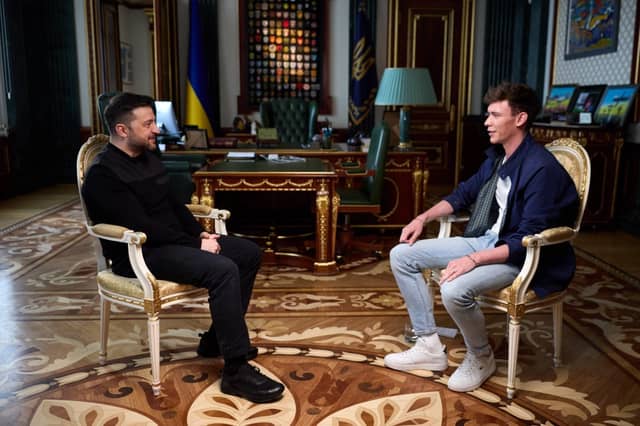

Robertson’s work has gained him an international following, an interview with Zelenskyy and an arrest warrant from Russia
His typical reporting is done in places like Kherson, Ukraine while being tailed by Russian drones or examining Damascus after the fall of Syria’s President al-Assad, so for Kilkenny-native Caolan Robertson, investigating in Limerick is an odd position to find himself in.
Robertson, who now lives in Ukraine full-time where his war reporting garners millions of views, has returned home to scrutinize Auginish Alumina, Europe’s biggest alumina refinery which exports a large percentage of its material directly to Russia.
After posing as an industrial enthusiast to grab a sample of the alumina and later as an agricultural journalist to gain access to Minister of State Niall Collins at the Newcastle West Show, Robertson is using his investigative chops in Ireland to try and uncover more information about the possible links between Irish exports and the Russian war machine.
“The only way you can speak to an Irish politician is by going to a farm show!” he quips.
A past pupil of St Canice’s National School in the city and member of the local Young Irish Filmmakers organisation, Kilkenny still played an important part in his life growing up, even despite his move away to England at 13.
“I would visit three or four times a year where my home is so I still grew up spending the summer holidays here like going with fake IDs to the pubs and everything like that for the first time,” he reflects.
“It’s where I learned to film before I got into actual movie making and documentary making now.”
As an adult in the UK, Robertson became involved in far-right politics, going on to produce videos for some of its most prominent activists.
However after becoming increasingly disillusioned, he shunned the ideology, something he previously described as “leaving a cult” and has since done work on bringing attention to the tactics which the far-right employs to draw people in.
Later working with Byline Media in London, Robertson covered issues of the day like Brexit, but it was to be the fateful Russian invasion of Ukraine in 2022 that would prove the defining moment in his career and life as a whole.
Not content with reporting from the Polish border as thousands of Ukrainian refugees streamed across, he pushed to be allowed access to the conflict zone, but was initially rebuffed.
“I called my boss and begged him to go to Kyiv,” Robertson remembers. “He said ‘absolutely under no circumstances’. I’d had no war training, no combat experience, none of it.”
“They wouldn’t let me go for a year, but I was desperate to,” he adds.
After many months of intense fighting where battlelines became entrenched and it became clear that Kyiv would not fall, Robertson was finally granted permission to travel to the Ukrainian capital, arriving on Valentine’s Day 2023.
The scene there was far from what he was anticipating in a war-torn nation where the mood by all logic should have been low.
“I expected to see a city devastated, miserable and brutal with Eastern European stereotypes. It was the opposite,” he describes. “People were celebrating love, there were sandbags with people selling flowers around them, it was absolutely incredible.”
“I asked them ‘why are you celebrating Valentine’s Day and still buying flowers?’ People said ‘because love is victory and that’s what we’re fighting for, that’s how we win’, so it was amazing,” he reflects.
The scene grew darker however, as Robertson travelled further east to the city of Bakhmut with veteran war reporter John Sweeney, where they documented illegal weapons use and civilian torture.
The film they produced, Under Deadly Skies: Ukraine’s Eastern Front, was highly acclaimed and awarded, but even after returning to London, the young journalist felt that his work was nowhere near complete.
“I couldn’t go back to a normal life. I felt like a part of me had been left in Ukraine,” he outlines. “Almost a version of me that was innocent to the kind of atrocities that Russia was carrying out.”
“A version of me stayed there and died there,” Robertson continues. “I couldn’t socialise with the same people that I used to, couldn’t sit in bars and talk to friends about drama or stuff that was happening because my mind was completely fixated by what was going on.”
“As a storyteller, as a filmmaker here when I was growing up in Kilkenny, it just felt like that was my purpose.”
The seed had been planted in Robertson’s mind and two years ago he made the monumental decision to sell his shares at Byline Media, pack his bags and relocate to Ukraine full-time, and after a slow start, the popularity of his content has skyrocketed.
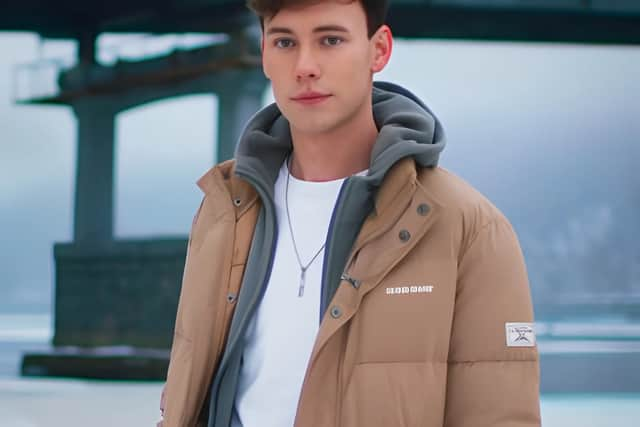
“I pulled out my phone on my balcony in Odessa and just did a daily report talking about what was happening. I’d get two or three views, one or two likes a day and then it started going up,” he recalls.
“Now I’m the most recognised independent journalist covering the Ukraine War,” he asserts.
A bold claim indeed, but when you take a look through the scale of his following, view counts and engagement figures, it’s difficult to disagree.
Robertson’s reporting crusade has led him all over Ukraine, but also to places like Syria in the wake of regime change and Hungary during President Orban’s recent election ousting.
Despite the myriad of stories he’s worked on and locations he’s visited, one desired interviewee had proven maddeningly elusive until recently: the Ukrainian president himself, Volodymyr Zelenskyy.
Robertson’s growing profile had attracted the attention of one of the president’s advisors who had followed him on X and after months of pushing, with numerous rejections, his persistence finally paid off.
“I just woke up one morning in Kyiv about three months ago, the sun was shining at 6am through the window and my first thought was, ‘I want to interview the president,” he says.
“I texted the advisor and said ‘look, it’s Sunday, the weather’s beautiful, I’m back in Kyiv, can I interview the president?’ And they replied 10 minutes later, ‘tomorrow at 3pm’.”
After scrambling to find a cameraman at short notice, Robertson was fortunately able to land the same person who recorded President Zelenskyy’s interview with David Letterman, and after a whirlwind span of hours, he was sat across from Ukraine’s leader and most pivotal figurehead.
Robertson asked about some typical issues such as President Orban’s behaviour towards Ukraine in Hungary, but eventually took a different approach from most interviewers by speaking to Zelenskyy the man rather than just the politician.
“I thought I’d skip on to something more unusual and asked him as a husband, father, and son, not as a president: ‘how are you after everything?’”
“The air raid sirens were going off and he said, ‘well it’s hard you know, I feel like I’m driving a school bus and everyone’s behind me, the whole country, all together, and I’m trying to drive us to victory’. It was actually really beautiful,” Robertson recollects.
Though he’s landed a one-on-one exclusive with the most famous Ukrainian person in the war, Robertson prefers speaking to the inconspicuous, everyday civilians in the country, who keep it ticking over and maintain some sort of normality in a time of such strife.
“The story for me when it comes to war isn’t about how many missiles were launched every day or how many drones were fired,” he says.
“It’s the person who wakes up every morning and still decides to open her flower shop because it’s colour in the city and people should still be able to have some form of life.”
“That’s what people are still fighting for. Those are the real victims of war; civilians.”
Robertson is bringing the alumina sample that he extracted from Aughinish to be tested against material taken from missiles and drones on the battlefield in Ukraine to attempt to establish indisputable evidence that exports from the Irish plant are being used in the Russian military-industrial complex.
He thinks it’s likely that these suspicions will be confirmed, but as an Irishman who’s built his life in Ukraine, the prospect of this being proven is a bitter pill to swallow.
“Watching the country I’m from facilitate the materials and the money for the weapons that I’ve watched be used on civilians is outrageous and really depressing,” he admits.
Coming back to his home nation to do the same work he has done across warzones is a task he never expected to face, as somewhere he imagined as a place of refuge comes crashing into his professional life.
“I find it very stressful. It’s difficult and it's not a place I ever thought would be connected with the places I go.”
“Ireland is a place I would imagine coming home to for respite, for peace, to relax, to reset. Whenever I get very stressed, sometimes I imagine coming to visit my mum here in the countryside and being at peace, but I never imagined the two things would crossover,” he explains.
Once the war finally ends, Robertson hopes to stay in Ukraine where his husband also lives, buy a house in Odessa and use this as a base while continuing to investigate dictatorships and corruption.
His reporting has drawn the attention of some of the world’s biggest news outlets, but editorial control and independence is now a non-negotiable for the Kilkenny man.
“I’ve been offered jobs by nearly every major news network in the last six months to do different types of roles and I’ve turned it down every single time.”
“I will never give up my independent freedom,” he concludes.