

Kilkenny 'microforests' to thrive under Japanese botanist's innovative method

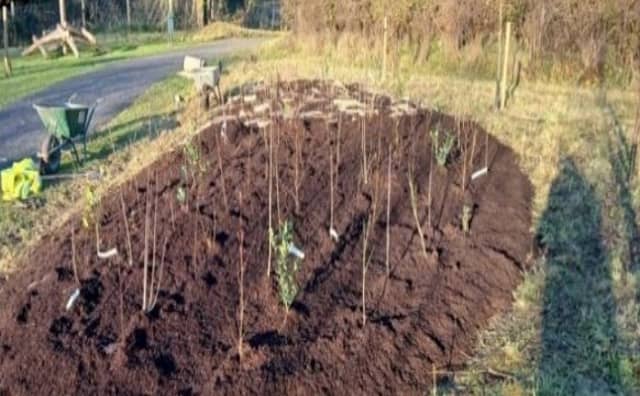

The 'Miyawaki Method' has already been used for microforest projects in Slieverue, Ferrybank and Kilkenny Countryside Park - with many more planned!
Over the last twelve months, the Parks Department at Kilkenny County Council has continued to expand its microforest programme across Kilkenny.
This initiative uses the 'Miyawaki Method', a Japanese afforestation technique that involves planting dense clusters of native tree and shrub species together to rapidly establish small, self-sustaining woodland habitats.
Developed by Japanese botanist Dr Akira Miyawaki, it is an afforestation technique for creating dense, native, and fast-growing mini-forests, often on small or degraded urban plots.
By planting 3-5 native saplings per square meter, the technique fosters competition, resulting in forests that grow faster, denser, and quickly become self-sustaining.
More than 5,000 native saplings have been planted using this approach in locations including Slieverue, Ferrybank, Kilkenny Countryside Park, and several other sites throughout the city and county.
The method is environmentally friendly, relying on cardboard and organic mulch to suppress weeds and promote strong early growth without the need for chemicals.
Microforests are considered to be an excellent way to create biodiversity rich habitats in small urban or community spaces and the local authority have confirmed that they plan to continue this work into the future.