


1.
When Cork-woman Paula Cronin embarked on a bit of family history research she never expected to discover that her roots were not, as she thought, in her home county, but in Kilkenny. Paula had long been a visitor to the city, and said she always felt at home here, but it was decades before she uncovered her family’s origins in Kilkenny City and the exciting life of her Kilkenny grandfather - Lance Corporal William Ryan. Having studied his career in the British Army during the last two decades of the nineteenth century, Paula has written his story. Early Life William Ryan was born on October 30, 1863, in Poulgour, Kilkenny, to Michael Ryan and Ellen Gorman. He was baptised on 1 November 1863 in St Patrick’s, Kilkenny, the third of four sons. After the death of his father in 1866, William’s mother hired a woman to care for her three sons while she was employed as a live-in servant. Later, her sons were placed in a Church of Ireland family. According to family lore, the boys were denied a formal education and worked in the family store. In 1878, William’s mother, Ellen Ryan died in the Kilkenny Union Workhouse, leaving her sons orphaned. Kilkenny experienced great prosperity from 1863 to 1883. However, many impoverished families were confined to cramped accommodation, enduring hunger, sickness and the constant threat of the workhouse. Enlistment On July 21 1883, nineteen-year old, William Ryan enlisted at Victoria Barracks, Clonmel, County Tipperary, joining the 2nd battalion of the 18th Royal Irish Regiment of Foot. His military service book records him as 5 feet 8¾ inches, two inches taller than the average male in Ireland at that time, an Irish complexion, grey eyes, dark brown hair, and a scar that ran across his left temple and upper eyelid. In the late nineteenth century, the British Army offered Irish men a steady income, lodging, educational opportunities and the chance to travel the world. For Ryan, it represented the beginning of an army career spanning two decades, across different
2.
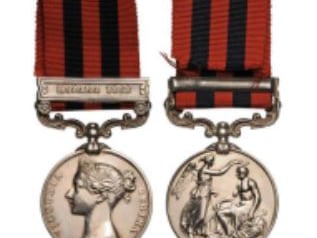
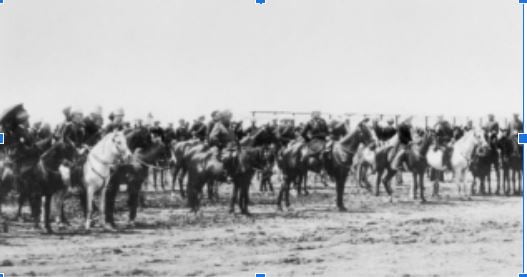
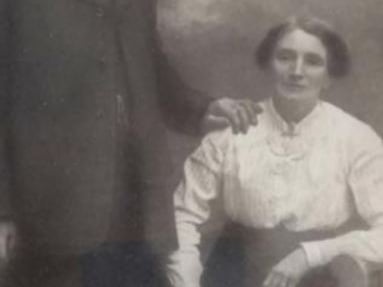
Hazara Expedition In 1888 the 2nd Battalion of the Royal Irish Regiment of Foot participated in the Hazar (Black Mountain) Campaign. Medals were presented to those who participated in the campaign at Cherat in April 1890. Following postings in Nowshera, Peshwar and Cherat, Private Ryan’s battalion returned to Camp Colchester in 1891 and Clonmel in 1892. In 1893, under new orders, they redeployed to Lucknow, India before marching to Jubbolpore. The Tirah Expedition and the Khyber Pass ABOVE: The Saluting Point, Khanna Plain, Rawal Pindi, 1885 The 2nd battalion was mobilised for the Tirah Expedition in August 1897, to the south of the Khyber Pass. The regiment faced high-altitude marches, combat situations and extreme conditions on the frontier. Private Ryan was awarded the India Medal with Punjab and Samana Clasps, recognising his service. Extended Service Ryan’s regiment was scheduled to return home in 1900, but was delayed due to the Second Boer War. The 2nd Battalion remained at Mhow, India. All infantry deemed fit for action were dispatched to the 1st Battalion, leaving the 2nd Battalion understaffed. In response, the government offered bounties and furloughs to encourage soldiers to extend their service. Ryan accepted the £26 and extended his service, achieving promotion to Lance Corporal. He received the Good Conduct Medal in 1901 and returned to Clonmel the same year. It was on his return to Ireland that he met the sister of an army colleague, Margaret Murphy. It was love at first sight and they married in 1902, settling in County Waterford. Pictured below.Lance Corporal Ryan retired from the army in 1903. He died in 1946. Final Thoughts William Ryan departed his hometown of Kilkenny not merely as a traveller, but to serve his country as a soldier. His journey from Clonmel to Aldershot, Malta, and India, represent the life experiences of many Irishmen who served in the British Army in the late 19th century. He marched from Kilkenny to the Khyber Pass - and through this story, his
3.
Hazara Expedition In 1888 the 2nd Battalion of the Royal Irish Regiment of Foot participated in the Hazar (Black Mountain) Campaign. Medals were presented to those who participated in the campaign at Cherat in April 1890. Following postings in Nowshera, Peshwar and Cherat, Private Ryan’s battalion returned to Camp Colchester in 1891 and Clonmel in 1892. In 1893, under new orders, they redeployed to Lucknow, India before marching to Jubbolpore. The Tirah Expedition and the Khyber Pass ABOVE: The Saluting Point, Khanna Plain, Rawal Pindi, 1885 The 2nd battalion was mobilised for the Tirah Expedition in August 1897, to the south of the Khyber Pass. The regiment faced high-altitude marches, combat situations and extreme conditions on the frontier. Private Ryan was awarded the India Medal with Punjab and Samana Clasps, recognising his service. Extended Service Ryan’s regiment was scheduled to return home in 1900, but was delayed due to the Second Boer War. The 2nd Battalion remained at Mhow, India. All infantry deemed fit for action were dispatched to the 1st Battalion, leaving the 2nd Battalion understaffed. In response, the government offered bounties and furloughs to encourage soldiers to extend their service. Ryan accepted the £26 and extended his service, achieving promotion to Lance Corporal. He received the Good Conduct Medal in 1901 and returned to Clonmel the same year. It was on his return to Ireland that he met the sister of an army colleague, Margaret Murphy. It was love at first sight and they married in 1902, settling in County Waterford. Pictured below.Lance Corporal Ryan retired from the army in 1903. He died in 1946. Final Thoughts William Ryan departed his hometown of Kilkenny not merely as a traveller, but to serve his country as a soldier. His journey from Clonmel to Aldershot, Malta, and India, represent the life experiences of many Irishmen who served in the British Army in the late 19th century. He marched from Kilkenny to the Khyber Pass - and through this story, his