

Kilkenny's darker tales come to life for Cultúr 2026

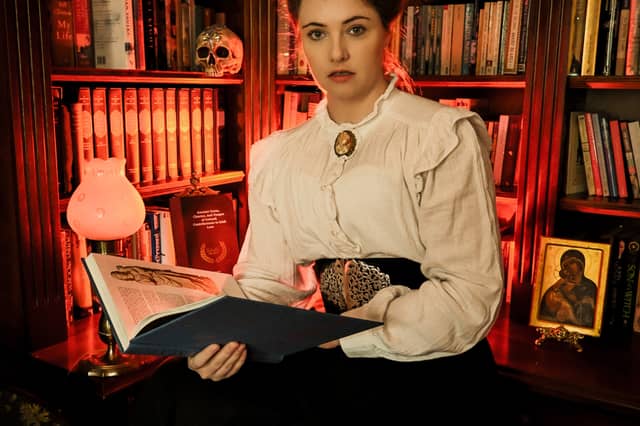

Kilkenny’s exploration of Gothic storytelling begins at Mayfair Library on October 10
Gothic literature, European folklore, street art and the echoes of a woman burned for witchcraft in medieval Kilkenny feature in the county’s autumn programme marking Ireland’s Presidency of the Council of the European Union.
As Ireland holds the Presidency of the Council of the European Union until December 2026, Cultúr 2026: Sharing Ireland’s Culture, the official cultural programme of Ireland’s Presidency, is bringing Ireland’s artists, creativity and heritage to stages and communities across Europe and at home.
Supported by a €5 million investment from Minister for Culture, Communications and Sport, Patrick O’Donovan T.D., and presented by Culture Ireland, Cultúr 2026 is bringing the work of Irish artists to audiences across all 27 EU Member States and beyond, while ensuring communities throughout Ireland can take part in the Presidency at home.
Patrick O’Donovan T.D., Minister for Culture, Communications and Sport, said: “Cultúr 2026 – Sharing Ireland’s Culture is a wonderful opportunity to celebrate the breadth of Irish culture, not only on stages across Europe, but in communities throughout Ireland.
“It was important to me that Ireland’s Presidency of the Council of the European Union should also be celebrated here at home, and that communities in every county have an opportunity to take part. Our culture is rooted in people and place, in our artists, our language, our heritage and our communities. Through Cultúr 2026, we are creating opportunities for people to come together, experience the arts and celebrate the culture we share.”
Working in partnership with local authorities across the country, Cultúr 2026 is bringing the Presidency directly into communities, with each Local Authority shaping a programme that reflects the artists, heritage and creative life of its area. The programme also creates opportunities for cultural exchange across Europe, with many counties developing collaborations with their twin European cities, strengthening long-standing relationships and forging new connections through arts and culture.
Spanning theatre, literature, music, visual art, architecture, dance, film and more, these local, national and international collaborations reflect a living Irish culture, rooted in tradition and place, shaped by contemporary creativity, and open to exchange and connection across Europe.
Here in Kilkenny, the autumn programme across the Arts, Heritage and Libraries will draw on the county’s extraordinary history and storytelling traditions while looking outward to Europe, exploring the connections between Irish and European folklore, Gothic literature, history and contemporary visual art.
A major strand of the programme will delve into Kilkenny’s darker stories and their connections with the supernatural traditions of Europe, culminating on November 1 with Burning Woman at The Parade Tower, Kilkenny Castle.
The first in a new annual seminar series, Burning Woman examines the story of Petronilla de Midia, who was burned at the stake for witchcraft in Kilkenny in 1324, and asks why her story continues to resonate more than 700 years later.
Featuring historians Dr Andrew Sneddon, Dr Celeste McNamara and Mary McAuliffe and moderated by Catriona Crowe, the discussion will explore themes including power, wealth, church and state, marginalisation and women’s rights, considering Petronilla’s story within a contemporary European context. The seminar is presented as part of the Toil & Trouble Festival.
Ahead of this, contemporary European creativity will arrive at Butler Gallery when The Walls Project brings its street art workshops to Kilkenny on October 3, 4 and 10 from 3pm–5.30pm each day.
Part of the nationwide EU Walls Project for Ireland’s Presidency, the workshops will introduce young people and families to spray painting and mural techniques, led by experienced street artists in a welcoming and creative environment.
Known for transforming public spaces through large-scale murals and community art, The Walls Project will take its Presidency workshops to locations across Ireland. Alongside the workshops, communities will be invited to propose a permanent wall for a celebratory mural, creating a lasting artwork reflecting community participation and the spirit of Ireland’s EU Presidency.
As Home of Halloween season starts to get underway, Kilkenny’s exploration of Gothic storytelling begins at Mayfair Library on October 10, when award-winning writer Niamh Boyce leads the first of two Uncanny Kilkenny – Monsters, Changelings and Vampires writing workshops, continuing on October 17.
Drawing on Irish and Eastern European folklore and classic Gothic traditions, the workshops will explore ghosts, doubles, forbidden rooms, uncanny objects and vampires, encouraging writers to create new work inspired by contemporary concerns and the darker side of Kilkenny and European folklore.
Niamh will also present a Recommended Reading List of her top picks for Irish Gothic, inspiring library members and readers everywhere to explore the stories, creatures and motifs of Irish and European Gothic traditions through some of the best classic and contemporary Irish literature.
Between the two workshops, on October 15, researcher Brian Cleary comes to Mayfair Library for Finding Gibbet Hill, telling the extraordinary story of how he rediscovered a long-lost short story by Bram Stoker that had remained undisturbed in the National Library of Ireland for more than 130 years.
The event will explore the archival research and literary detective work behind the discovery of Gibbet Hill, offering audiences an insight into the process that brought a forgotten work by one of Ireland’s most internationally celebrated Gothic writers back into the light. The event will be live Irish Sign Language interpreted.
On October 27, storyteller Emily Collins will take audiences To the Other World and Beyond with an evening of Irish and European folk stories at Mayfair Library.
Bringing Irish folklore together with tales from across Europe, the performance will journey through a world of faeries, witches, werewolves, vampires and other supernatural beings. Through recurring characters, curses, charms and themes, the evening will explore the connections between stories preserved through oral and archival traditions in Ireland and across Europe.
The programme then culminates on November 1 with Burning Woman, bringing Kilkenny’s medieval history into conversation with contemporary questions around women, power, marginalisation and society, and demonstrating how stories rooted in one place can resonate across centuries and borders.
Together, Kilkenny’s Cultúr 2026 programme will celebrate the county’s distinctive heritage and creativity while revealing its connections with wider European cultural traditions – from Irish and Eastern European monsters, changelings and vampires to Bram Stoker’s Gothic imagination, shared European folk tales, contemporary street art and the remarkable medieval story of Petronilla de Midia.
Through events at Butler Gallery, Mayfair Library and Kilkenny Castle, Cultúr 2026 will bring the spirit of Ireland’s Presidency home to Kilkenny, inviting audiences to discover how the county’s stories, histories and creativity connect with those of its European neighbours.
For more information on Cultúr 2026 events see irelandculture2026.eu