

OPINION: Public transport needs sustained investment, even routes not immediately profitable - Kilkenny senator

Fixing rural transport means designing a system around people’s real lives rather than profit
Rural transport policy in Ireland is often reduced to lines on a map and figures in a table, but for those who rely on buses and trains, transport is not a line on a map; it can be a lifeline.
It determines whether someone makes a hospital appointment or misses it, whether an older person can meet a friend or remains isolated, and whether people can access work, education, shops, or simply a social life. Reliable public transport is not a luxury; it is essential to participate in community life.
Yet the reality on the ground frequently contradicts the government’s claims of record investment. Rail projects are quietly erased or pushed into distant long-term plans. Commercial bus routes are withdrawn when they no longer make a profit. The National Transport Authority has highlighted a €250 million funding gap.
For those who depend on these services, this is the difference between isolation and inclusion, between opportunity and exclusion.
Too many bus routes operate on a purely commercial basis, leaving them vulnerable when passenger numbers fall or operating costs rise. When a service is deemed no longer viable, it can disappear with little warning.
This is something people in Castlecomer experienced last year when the JJ Kavanagh 717 service was no longer routed through the town. More recently, the announcement that Bus Éireann’s Expressway Route 4 was to be cut, left communities across Kilkenny and Carlow reeling, frustrated, worried, and unsure how their daily lives would be affected if the service ended.
When a private provider withdraws a route, what follows is a process that determines whether a Public Service Obligation applies. If it does, then there is tendering for a replacement provider, and eventually reinstating a service that may look very different, often less frequent and less direct.
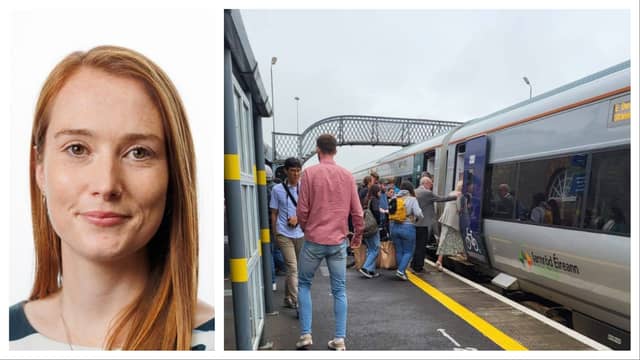
Rail services are also hugely lacking in rural Ireland. The strengthening of the rail network, once presented as a priority, has now been pushed into long-term planning, with no clear timeline for delivery. Recent decisions by government to scale back the ambition of major rail infrastructure projects, such as the much hoped for reopening of the Waterford to Wexford rail line, make no sense.
It is particularly frustrating when the rail network across the country is operating at or near capacity. On the Waterford to Dublin line, for example, trains are routinely full, with many people forced to stand for over an hour despite having paid for a seat.
A major contributor to this problem is a decision made around 20 years ago to shorten the platform in Kilkenny, a short-sighted move that now prevents longer trains from operating, which has real consequences for daily commuters.
Capacity pressures are compounded by a timetable which fails to meet modern travel needs. Not everyone works the 9-5 anymore; we have flexible work hours, meetings that go on late or after work commitments. There is no commuter train that arrives in Waterford early enough for people working or studying, and there are no late-night trains to or from Dublin, leaving passengers with limited and often impractical options.
As someone who regularly uses both trains and buses, I have felt the impact of service reductions and changes personally. Journeys that were once straightforward become unnecessarily complicated or no longer possible. At the same time, I am very conscious that I have an alternative; I can drive or get a lift.
That option is not available to everyone and recognising that difference is important. It is a reminder that transport policy must be grounded in equity, not the assumption that everyone can use a car if a bus route is cancelled. A more resilient rural transport system is possible, but it requires a shift in approach.
Public transport must be treated as essential infrastructure in rural Ireland. That means sustained investment, even where routes are not immediately profitable. The value of a bus or train line cannot be measured solely in fares; it must also account for social inclusion, regional development, and environmental impact.
Solutions do exist - and many have been outlined in the Social Democrats’ progressive transport policies. These include expanding and properly funding Local Link services; integrating timetables and ticketing across all public transport so that passengers no longer need to book multiple tickets for a single journey; prioritising frequent, reliable services; and increasing demand-responsive services for very rural areas.
Fixing rural transport means designing a system around people’s real lives rather than projected profit. It requires recognition that connectivity is an essential part of infrastructure - not only for balanced regional development, but also for tourism, economic participation, and everyday quality of life.
Rural communities deserve a transport system that recognises their needs as real, urgent, and equal. One that supports connection, opportunity, and participation, rather than leaving people behind.