

‘The State cannot continue to turn a blind eye’: Kilkenny TD seeks Dáil debate on thalidomide survivors
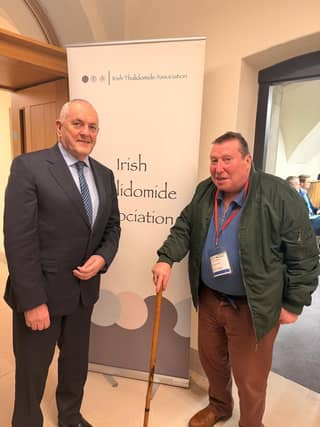

The drug caused birth defects in thousands of babies worldwide in the late 1950s and early 1960s
Fianna Fáil TD for Carlow-Kilkenny, John McGuinness, has written to the Government Chief Whip requesting an urgent and dedicated Dáil debate on the longstanding demands of Ireland’s thalidomide survivors.
Deputy McGuinness said it is long past time for the State to finally deal comprehensively and compassionately with those affected.
“I want their claims settled. These survivors have been waiting for decades and their demands are entirely reasonable. The State cannot continue to turn a blind eye to a small and diminishing group of people who have suffered all their lives through no fault of their own,” he said.
Deputy McGuinness called for a comprehensive, statutory support package to be established without delay, one that recognises the lifelong disabilities and evolving health needs of all survivors and that “such a package must include every survivor. These individuals deserve certainty, security and recognition from the State after a lifetime of challenges”.
The Irish Thalidomide Association (ITA) has long sought three core commitments from the State. These are a formal State apology, statutory supports tailored to the complex and changing needs of survivors and a fair compensation scheme.
There are currently around 40 thalidomide survivors in Ireland, all now in their 60s. The ITA has also highlighted that a small number of their mothers, some in their 90s, are still alive and deserve recognition for the hardships they endured.
Deputy McGuinness noted that although a financial settlement between the Irish State and Gruenthal, the drug’s manufacturer, was reached in 1975, the agreement reflected limited medical expectations at the time.
“The 1975 settlement was made when it was believed those affected would not live into older age,” he outlined.
“Nobody could have foreseen the complexity of their health needs half a century later. The State must now step up and address this reality,” he concluded.
Funded by the Local Democracy Reporting Scheme