

Kilkenny house prices in first three months of 2025 are 12% higher than a year previously


Daft report: Average price of a home is now €319,000, 48% above the level seen at the start of pandemic
House prices in Kilkenny in the first three months of 2025 were 12% higher than a year previously, compared to a rise of 4% seen in the 12 months to March 2024, according to the latest Daft.ie House Price Report.
The average price of a home is now €319,000, 48% above the level seen at the start of the Covid-19 pandemic. The current rate of inflation in the market is the second-highest seen in the ten years since mortgage market rules were introduced, exceeded only by the spike in prices seen in early 2017 (11.7% year-on-year then, vs 11.6% year-on-year now).
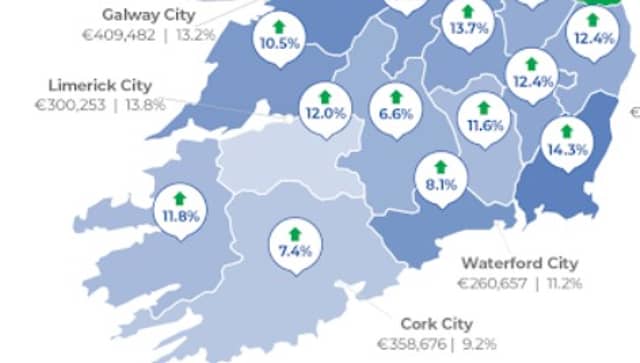
Inflation in the capital is now running at 12.2%, the highest rate in eight years, while in the rest of Leinster, the annual increase in prices is 13.4%, also the highest since early 2017. Galway (13.2%) and Limerick cities (13.8%) are also seeing rates of inflation above the national average, while the rate seen in Waterford (11.2%) and Cork cities (9.2%) is slower.
As before, the sharp increases in prices around the country are happening at a time of very tight supply. The number of second-hand homes available to buy nationwide on March 1 stood at less than 9,300. This is down 17% year-on-year and also marks the lowest total ever recorded in a series extending back to January 2007. The three months since the start of the year mark the only three months since 2007 where there have been fewer than 10,000 second-hand homes available to buy.
The report's author Ronan Lyons, economist at Trinity College Dublin, says the ultimate solution remains unchanged from that which was needed a decade ago: a lot more homes need to be built, so that the country’s housing is adequate for its households.
“Housing prices are now increasing at a faster rate than almost any other time since mortgage market rules were introduced a decade ago. The increases are clearly linked to the lack of second-hand supply. Even as transactions of newly-built homes increase, the second-hand market is at its tightest in a series going back almost two decades," he said.
"The latest surge in inflation is due, at least in part, to the well-flagged increase in interest rates, which saw existing homeowners fix their rates, often for many years, with consequences for liquidity in the second-hand market. But while the increase in interest rates has played a role, the underlying issue remains the housing deficit. The mortgage market rules were introduced a decade ago to prevent a repeat of the loose lending that drove Ireland’s Celtic Tiger bubble and crash. Nonetheless, prices are up 75% since then, not because of too much credit but because of too few homes.”