

Wildfire - two weeks of devastation in nature on Kilkenny border

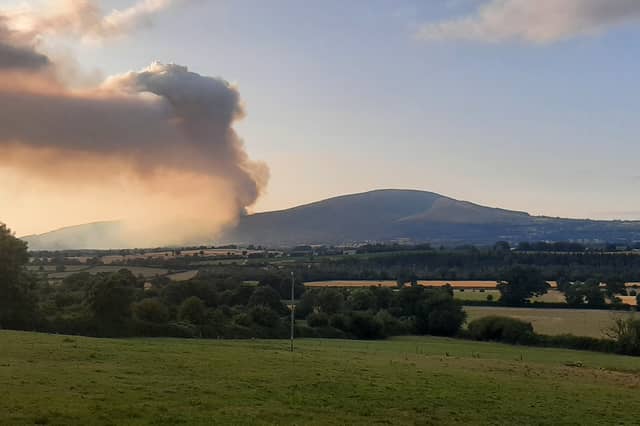

Ten days after emergency services were first called in to tackle a wildfire on lands overlooking the South Kilkenny – Tipperary border they were still on-site and monitoring ‘hot spots,’ last Wednesday morning.
It would be days before the columns of smoke rising into the sky stopped.
With smoke and flames visible from many parts of Kilkenny, over several days, the iconic Slievenamon ‘mountain’ was the focus not only of local Fire and Rescue Services but also aerial support, from the Irish Defence Forces.
Locals also played a part in the operation, with agricultural tankers turned to water-carriers as they dampened down areas of forestry and local homes.
By Sunday, July 26, seven days after it began, the majority of the fire-affected mountain area had been successfully contained, with response efforts focused on a small number of remaining hot spots.
On Monday afternoon, July 27, it was reported that emergency services and response agencies remained actively engaged on site, with the overall situation remaining stable.
Crews did, however, continue to monitor and address a small number of isolated hot spots.
In the most recent update before we went to print, the overall situation on Slievenamon was described as stable.
Outbreaks of fire activity are to be expected following a wildfire event of this scale, a Tipperary County Council spokesperson said. Coillte crews are also managing these situations, supported where necessary by emergency services.
All reports of smoke or flare-ups will be assessed and responded to as required by emergency services.
Tipperary Fire and Rescue Service led the operation, liaising with other services.
All week, crews at the scene worked in challenging terrain conditions however, at all times the emergency services assured that there was no threat to lives or property.
Hot spots were reported in the vicinity of the Holy Year Cross, at the top of the mountain.
Patterns of fire changed during the week as weather conditions changed.
On Wednesday there was a worrying development as the fire spread to Coillte forestry on the mountain.
In particular, on Sunday efforts were affected by “changing and swirling wind conditions.”
The primary focus for the first days was on the north-eastern side of the mountain. Despite a reduction in activity in the following days, fire activity increased again on Saturday, this time on the southern side of Slievenamon.
As operations moved into a more intensive, ground-based firefighting phase, specialist equipment was used to support crews working in challenging terrain, assisting access, containment and extinguishment efforts.
From the start of the incident, members of the public were asked to avoid the affected area, avoid non-essential travel on foot, scrambler or by any other vehicle and refrain from operating drones, which can interfere with emergency response and aerial firefighting operations.
Local residents were advised to keep windows and doors closed where smoke was present, check on vulnerable people, including those with respiratory conditions and exercise caution when travelling as, at times, smoke reduced visibility on local roads.