

Tom McCaughren: Kilkenny's Noel Hoyne, Irish Army Corporal, remembered for pivotal role in 1960 Niemba ambush
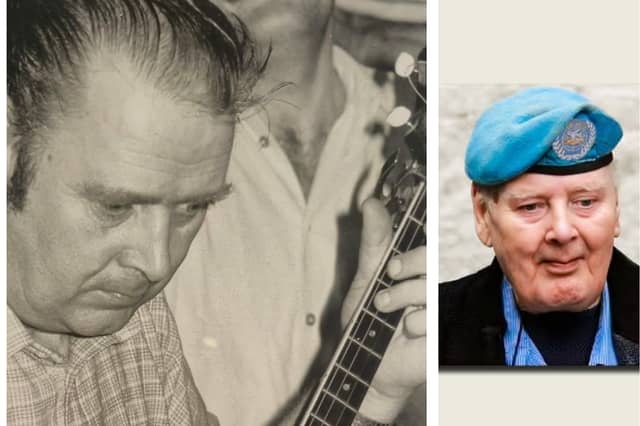

Tom McCaughren on his friend who served with UN Peacekeepers, narrowly escaped death, and saved the life of a little girl
The death occurred recently of Noel Hoyne from Clohogue, Clifden, Clara. A Corporal in the Irish Army, he was serving with the 33rd Irish UN Battalion in the Congo in 1960 when the Niemba ambush occurred.
Even though he was only 19 at the time, as an Army radio operator, Corporal Noel Hoyne played a pivotal role in co-ordinating the events that occurred before, during and after the ambush in Niemba in 1960 in which nine of his colleagues serving with the United Nations peacekeeping force in the Congo were killed. Like Noel, most of them were in their late teens to early twenties.
His platoon had been sent out into the bush to the village of Niemba, 86 miles from headquarters in Albertville, after it had been sacked in turn by Baluba warriors and Belgian gendarmarie and many villagers killed.
I interviewed Noel three years after the ambush when doing research for my book, The Peacemakers of Niemba; having been central to the tragic events he was perfectly placed to help me find out what had happened.
I soon realised that it was by their presence, rather their meagre numbers, that the soldiers were able to bring some measure of protection to those villagers who had survived as only half of the 40-man platoon had arrived by the time the ambush occurred.
Among them was the medical orderly, Private Mattie Farrell, and he was able to help many of the villagers suffering from a variety of ailments and injuries. He was also able to help a 12-year-old handicapped girl whom Noel had rescued out in the bush.
He was taking a stroll through a deserted village, when he found her sitting on a crude home-made wooden chair near a hut on the edge of the bush. As he approached she started edging the chair towards the door of the hut and he realised she was paralysed from the waist down.
It turned out that Feza, as she was called, had been abandoned when her parents, in common with the other villagers, had fled from militant Baluba. She was dying of starvation, surviving only on mango fruit and was like a skeleton. Noel and his friends brought her back to the camp and with the help of the medical orderly Farrell, nursed her back to health. At one stage they considered bringing her back to Ireland for treatment in the Rehabilitation Centre in Dun Laoghaire, but that wasn't possible so arrangements were made for her to be placed in the care of the White Sisters in Albertville.
The platoon commander, Lt Kevin Gleeson was also from Kilkenny, being the son of the Garda Sergeant Michael Gleeson, in Goresbridge, and Kevin and Noel got on well together. News from home was always welcome, and when Noel received the Kilkenny People he passed it on.
He told me his radio set was positioned just outside the bedroom door of the abandoned cottage that had become Gleeson's billet, so that he would have ready access to it.
The bush was full of Baluba warriors and missions carried out by members of the platoon were full of danger. Their vehicles, a requisitioned Landrover and Volkswagen pick-up had no radio, the only radio being Noel's with which he contacted battalion headquarters at certain times each day, or when there was an emergency, and there were plenty of those.
On the morning of Tuesday, November 8, Noel narrowly escaped death as he travelled the road that would lead nine of his colleages to death a few hours later.
Having made his morning check call, he accepted an invitation from Gleeson to join Sgt Hugh Gaynor and himself to see what roadblocks the Baluba had put on the Manono road to the south. Fortunately for him, it began to rain, the red dust turned to mud, and they turned back.
In the afternoon, Lt Gleeson took a patrol down the same road to clear the road blocks, and Noel had the unenviable job of radioing battalion headquarters to raise the alarm when they didn't return. He also became the go-between in the rescue and recovery operations that followed the ambush, conveying the bad news to headquarters that in the battle eight members of the patrol, including Lt Gleeson and Sgt Gaynor, had been killed, the good news that two were alive, and the puzzling news that one was one missing.
Noel’s essential role as radio operator didn’t stop there. In the battle with the patrol, quite a number of warriors were either killed or injured. Some of the injured were taken on lorries farther south to a hospital in the Baluba stronghold of Manono. An Irish doctor worked there, and he marked the cards at the end of the beds with a small red ink cross.
With that information to work on, a plan called Operation Shamrock was drawn up to bring some of the warriors to justice.There was a UN base with an airstrip near Manono, manned by Nigerian troops. Noel was flown in to handle radio communications, and when he had set up, a specially selected squad of soldiers from headquarters followed. From there the squad drove through the Baluba town in the middle of the night, took seven of the injured warriors from their hospital beds, flew them back to Albertville and handed them over to the judicial authorities for trial.
Subsquently it was discovered that two of the warriors had not been involved in the ambush, so another operation was mounted. Noel was called upon once again to handle radio communications, and the two were flown back to Manono and put back in their hospital beds. The other five were convicted of murder and attempted murder.
I spent a lot of time talking to Noel about these matters, and then, when I was updating The Peacemakers of Niemba, for a new edition, published in 2013, I went down to Kilkenny to talk to him again as I needed to clarify a couple of issues. His memory was still clear as a bell and we spent a good deal of time discussing them.
I last met Noel three years ago when I was giving a presentation in the Riverbank Arts Centre in Newbridge about the ambush. Unfortunately he was ill, his voice having given way to cancer. But he made a great effort to be there. He was also happy to meet up with Lt Gleeson’s brother, Fergus, and Walter Raftery, who as a young engineering officer had installed proper lighting for them in Niemba, a great service as the Baluba warriors posed a very real threat when darkness fell.
Noel and I remained firm friends for 63 years, during which time I came to appreciate that he was a great musician, but above all, a great family man. I appreciated his help in writing my book, but I also enjoyed and appreciated a friendship that lasted a lifetime.
Beloved husband of Ellen and much loved father of Catherine, Mary, Danny, Fran, Helena, Ger, Noel and Caroline, Noel is dearly missed by his loving family, sons-in-law, daughters-in-law, grandchildren and great grandchildren, nephews and nieces, extended family, kind neighbours and friends. May he rest in peace.
- Tom McCaughren
Tom McCaughren was formerly Security Correspondent of RTE, and is author of The Peacemakers of Niemba, published by Somerville Press.