

‘Shouldn’t ever have had to be this hard of a fight’ - Campaign ends in victory for Kilkenny activists
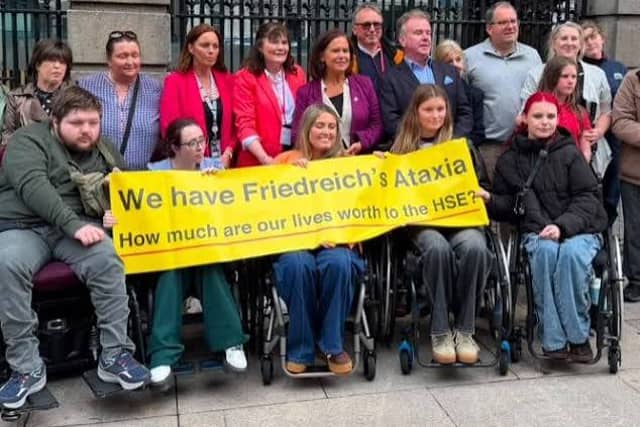

People living with Friedreich’s ataxia are celebrating the approval of Skyclarys in Ireland but frustrations will linger over the fact that such a lengthy battle was ever needed
They campaigned, they fought, they spoke, they posted, they waited, they suffered, they won.
After a ceaseless battle the better part of a year in the making, the 200 or so people in Ireland living with Friedreich’s ataxia finally got the news they had been waiting for as the HSE senior leadership group announced that the condition’s first treatment, Skyclarys, would be reimbursed in Ireland.
It was a moment that many of them probably thought would never come as more than one healthcare body had previously opposed this decision and advised against providing the breakthrough drug, delivering some bitter blows in the journey that has been fraught with obstacles.
The most crushing of these came just last month when the HSE Drugs Group opined that the drug was not cost efficient in relation to its efficacy, leading to widespread public and political shock and opposition.
While despair could have easily taken over in the face of this setback, the campaign instead moved into an even higher gear.
People living with FA took to social media to share their own stories about the progressive condition, which affects the nervous system and spinal cord, and their hopes about how Skyclarys could buy them priceless time by slowing its onset.
The effort to raise awareness culminated in a demonstration in Dublin when hundreds made their way from the Garden of Remembrance to Custom House Quay where speeches by central campaigners like Emily Felix from Kilkenny and various national politicians made the will of the majority of the country clear.
Over two and a half years after Skyclarys was approved in the EU and nearly a year after the National Centre for Pharmacoeconomics advised against providing it, Skyclarys was finally approved in Ireland, marking the hardest fought of victories in the face of difficulty and bringing the end to the journey that all involved had hoped for.
“It’s been a very long battle, over two years waiting,” said Emily in an online video after the decision. “There shouldn’t ever have had to be this hard of a fight,” she added.
“But I’m incredibly proud of our whole community, our family and friends. Everyone who has fought so hard with us to get to this stage. We finally have the answer we need, which is the approval for everyone in our community.”
“Everyone has a quality of life they deserve to maintain and to preserve their abilities. This should have been done a long time ago but we’re delighted and over the moon that we have this decision,” she concluded.
As Emily described, there will of course be jubilation that Skyclarys is now an imminent weapon in the arsenal against Friedreich’s ataxia, but this is mixed with the remaining frustration that they have had to give so much in order to gain any kind of relief against the condition.
The saga has opened up a wider conversation about how rare medication is funded in Ireland with dissatisfaction underpinned by the majority of the non-ministerial Fianna Fáíl parliamentary party signing a letter calling the current system “broken and not fit for purpose”.
The HSE has stated that a much improved offer from Biogen, the drug’s manufacturer, was key in getting reimbursement over the line and it had negotiated a much lower price than the figure of €130 million over five years that was previously being demanded.
This must lead to questions being asked of drugs companies essentially squeezing countries for as much money as possible, only to suddenly be able to offer a lower price in the face of public backlash while the Irish government can’t lag behind European contemporaries, some of which have made Skyclarys publicly available since last year.
Some voices from the campaign have stated that their ordeal cannot be repeated by future groups seeking similar rare disease medication, but for now, the Friedreich’s ataxia campaign can finally look forward to their long overdue fruits of victory.
Article funded by the Local Democracy Reporting Scheme