

HIGHLIGHT: The Spanish Civil War, its end and legacy in Kilkenny

The second and final part of the series, Cahal McAuley looks at the fracture of the Spanish Republic, the role that Kilkenny’s only casualty played and his legacy which survives in the county to this day
Many of the Irish International Brigaders entered Barcelona to the sights and sounds of jubilant, adoring crowds greeting the newly arrived foreign defenders of the Republic.
A powerful propaganda tool for the government, these heroic soldiers who had come to risk their lives for a country most of them had never before set foot in allowed it to spread the image of a righteous cause while it appealed for support from the western powers.
Aid from Great Britain and France was not quick in being supplied however, as the ill-advised policy of appeasement and non-intervention was pursued in the hope that it would slow the expansionist tendencies of Hitler.
The hesitancy of Prime Ministers Stanley Baldwin and later Neville Chamberlain of Britain along with Léon Blum of France to allow weapons to be given left the Soviet Union as the only major power to significantly aid the Republic.
While vital Soviet equipment, tanks and air support allowed the fragile Republic to keep up the battle against the German and Italian supplied nationalists, tension between the factions of the Popular Front threatened to undermine the war effort from within.
The broad forces of the Spanish left had come together to lock the right out of government and halt the rebels’ easy march to victory, but fundamental differences in ideology between its elements were coming to a head in May 1937.
Having armed themselves and ushered in a widespread social revolution at the war’s outset, workers’ militias from anarchist trade unions such as the CNT and anti-Stalin communists like the POUM were immovable in their belief that the war could not be won without protecting the revolution and were not willing to cede the gains made by the working class.
On the other side, the growing reliance on Soviet aid led to Spanish communists enjoying greater influence in the running of the government, who were opposed to revolution, believing it was damaging the war effort and its attempts to appear legitimate to Britain and France.
The communists were sure of the need to militarise the Republican Army and instil discipline in its troops, and although the militias had served their purpose in the hectic early days of fighting, their disorganised structures left them as no match for the troops of Franco’s elite units.
Despite their waning influence in government, the anarchists still controlled much of Catalonia and Aragon, and while George Brown and the XV International Brigade shored up the front near Madrid, the civil war within the civil war was fomenting in Barcelona.
Communist elements had been waging a months-long propaganda push against the POUM, slating their Trotskyist leanings and even labelling them as being rife with fascist agents.
Inspired by his experiences in Spain which shaped later works Animal Farm and 1984, legendary author George Orwell was a member of a POUM militia and served on the Aragon front before getting caught up in the trouble in Barcelona while on leave.
In his memoir on the conflict, Homage to Catalonia, Orwell gave his position on the revolution debate.
“The workers’ militias and police-forces must be preserved in their present form and every effort to ‘bourgeosify’ them must be resisted,” Orwell asserted.
“If the workers do not control the armed forces, the armed forces will control the workers. The war and the revolution are inseparable.”
Months of tension finally spilled over on May 3, 1937 when 200 police officers under the command of the government of Catalonia took control of Barcelona’s central telephone exchange, which had been operated by an anarcho-syndicalist committee since the outset of the war.
Rifle fire was exchanged, barricades were erected, snipers took up positions in church towers across the city and the May Days had begun.
Days of skirmishes and street battles ensued before Catalan President Lluís Companys accepted an offer of assistance from national Prime Minister Francisco Largo Caballero in restoring order.
By May 7, around 5,000 troops, mostly assault guards, had arrived from Madrid and Valencia and proceeded to disarm and arrest members of the CNT and other anarcho-syndicalist groups along with the POUM, which was later banned.
The anarchist militias were brought under control of the Popular Army and for better or worse, the forces which had saved the Republic in the early days of the coup had their social revolution suppressed by those which had developed it into a conventional fighting force.
Despite the government’s victory in Catalonia, the defeats against Franco continued and the May Days were symptomatic of the internal disputes which would tear the Republic apart.
Franco also had to contend with drawing multiple factions under a single umbrella and was far more successful at doing so, although he was greatly helped by all his allies being staunchly united in their belief that the Republic must be destroyed.
The elements of the Falange, monarchists, Carlists and conservatives cooperated in the way that the Republic could not, and the tide of the war turned in their favour.
A devoted communist but also a committed trade unionist, what did George Brown make of what happened to the trade unions in Catalonia, in opposition to the Soviet influence?
Brown spent a year at the International Lenin School in Moscow in 1931 and his letters make his feelings on the POUM and their allies in the British Independent Labour Party clear.
“They are handling the Trotskyist POUM leaders in the way necessary in war. The Aragon front, where the POUM and the ILP were sleeping, has at last awakened,” he wrote.
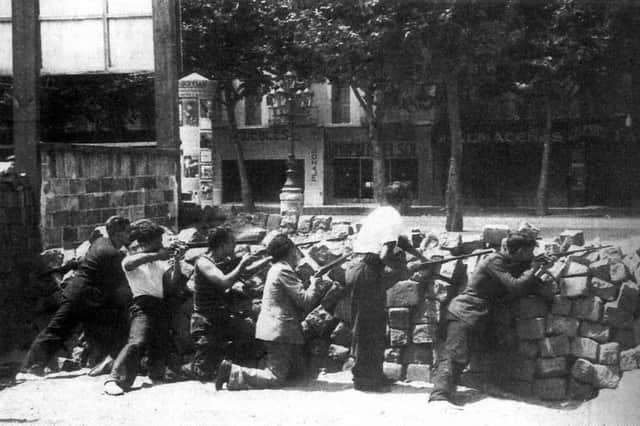
Though organised by the Communist International, many of the Irish brigaders were not themselves communists, even so, most would have supported the need for discipline and order in the war effort but were primarily concerned with beating fascism as expert on republicanism and radicalism, Dr Brian Hanley describes.
“They were politicised and I think they would have gone along with the idea that they needed to maintain strict discipline and order and the only support they were going to get was from the Soviet Union,” Dr Hanley says.
“But I think overall it was this idea that a stand had to be made against fascism and the idea that a stand against fascism and the idea of ‘they shall not pass’ and ‘Madrid will be the tomb of fascism’, that was very powerful.”
However, very few elements of the Spanish Civil War were monolithic, and even though most of the Irish volunteers aligned with communism, there were those who favoured the anarchist side.
“There were some Irish volunteers who were serving with the POUM militia and also the Northern Ireland Socialist Party had a lot to do with the POUM as well,” Dr Hanley outlines.
“So, in 1937 there’s a split in Ireland. There’s a newspaper called the Irish Democrat which was a broad-left wing paper and the Northern Ireland Socialist Party withdraws support from that because it favours the clampdown on the anarchists and the POUM.”
“In general though, they go along with the opposition (to the revolution), most people in Ireland are not aware of this taking place.”
For Brown and the other men of the International Brigades, the May Days, although well removed from them geographically, served to show how their fates and the fate of the Republic were being shaped by events far outside their control.
!Viva la Quince Brigada! - Death at Brunete
George Brown arrived in Spain at a time of high morale in the wake of the valiant defence of Madrid in 1936, among the first major engagements in which the International Brigades were involved.
Put to work in the city’s commissariat, he spent his weekends off in the trenches at Jarama, another success for the Republic in halting the nationalist advance on Madrid and Valencia, and one of the war’s bloodiest battles.
Brown was granted his wish of a transfer to the front and the upwards trajectory of his standing within the communist ranks was reflected in his appointment as political commissar of the XV International Brigade.
The fateful engagement from which he would not return was to take place at Brunete, in another attempt to relieve the beleaguered city of Madrid from the nationalists on its doorstep which began on July 6, 1937.
Devised to divert the rebels away from the north after the fall of Bilbao and from routes they were using to resupply their soldiers besieging the capital, 70,000 republican troops including 14,000 from the International Brigades were mobilised against the town of Brunete, west of Madrid, in an operation the scale of which had not been seen in the war to that point.
The first manoeuvre of the Popular Army after its absorption of the militias, its troops were well aware of the importance of what lay ahead.
Peter O’Connor, a member of the XV Brigade from Waterford wrote in his diary that “encamped in a beautiful forest on the side of the mountains. We are about to enter a battle which will prove decisive in the war against fascism.”
Political commissars generally performed a supervisory role, bringing up the line from the rear and maintaining discipline as a party representative in military units.
However, Brown was at the front with his comrades as the Brigade’s British Battalion moved on the village of Villanueva de la Cañada just north of Brunete.
The attack had caught the nationalist defenders thoroughly off guard and republican troops were advancing steadily although the village was well defended by fascist machine gun positions which forced Brown and his comrades to duck for cover on its outskirts.
The searingly hot summer weather wasn’t helped by the fact that the battalion’s water containers had been taken for refill and not returned, leaving them to fight the elements along with the nationalists.
In a horrific event which would scar many brigaders involved, a group of about 40 civilians emerged from a building with the attackers believing they were attempting to flee the village.
However, crouched at their rear, a group of fascist defenders were using the villagers as human shields to launch a counter-attack, leaving the British no choice but to return fire so as not to be wiped out.
The new battalion Commander, Fred Copeman said, “get ready to fire all you’ve got and don’t be sentimental.”
Though a ghastly sight, the anger at the mass of civilians bodies and what they had just witnessed energised the battalion which quickly entered Villanueva and took the position after savage close quarters fighting.
The losses taken were stark however, and the village lay a mass of corpses; republican, nationalist and civilian.
Among them was Brown, hit in the advance, and callously executed by a fascist while his comrades attempted to aid him, his grisly death was one of many thousands of a war in which revenge killings were to scar the country for generations.
Brown’s death and the circumstances around it generated great sorrow both in the ranks of the Brigades and with his family and comrades in Manchester as tributes flooded in from all corners of the republican movement.
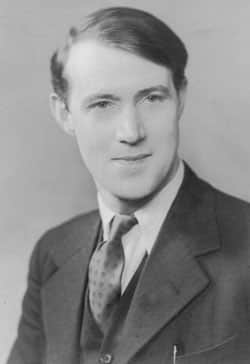
Communist journalist and founder of the XV Brigade’s newspaper, The Volunteer for Liberty, Ralph Bates, described Brown’s devotion to the defence of Spain and his popularity within the battalion.
“He always spoke humorously of his own work, but listening to his shrewd accounts and analyses, and feeling his sincerity and steady conviction, one could understand his great worth to the workers’ movement,” Bates wrote.
“There was an affectionate warmth in Comrade George Brown, combined with a hard and clear understanding that made him a splendid companion in work. Dry and mechanical formality had no place in our comrade, everything was living material, to be handed with sympathy and care.”
“I never saw him treat a single problem as a mere matter of routine. He was always anxious to return to the comrades of the Battalion.”
In war, where so many mothers grieve their sons that never came back, Mary Brown (nee Lackey) from Ballyneale who had returned home so her son would be born on Kilkenny soil could only take some solace from the fact that George had given his life in the defence of democracy and Spain.
“I am proud of my son and the only thing keeping me up is that he died in the cause of freedom and anti-fascism in which he believed till his last breath.”
Tiniebla - The Republic falls
Though ending in its capture, the victory at Villanueva which claimed the life of Brown was pyrrhic in nature, like so many briefly enjoyed by the Republic.
The hesitancy in pushing on after Brunete was taken gave time for the nationalists to shore up their defences by bringing in reinforcements and artillery to beat back the republican forces and retake the town, with both sides incurring devastating losses in the stalemate.
Military reversals persisted and Franco’s forces gained ground, cutting off Barcelona from the rest of the republican zone and continuing to encircle Madrid.
The enormous casualties and rigid tactics wrecked morale of the remaining brigaders and by 1938, Sean Dowling from Castlecomer was the last Kilkenny man in Spain on either side.
By the end of that year, the only hope for the Republic was to survive until the outbreak of war across Europe, which many were sure was by this point inevitable, but its leadership maintained a policy of aggressive combat.
A last, desperate push at the Ebro River was launched to give republican forces some breathing room and show that the fight was not yet over.
The last major engagement of the International Brigades, which were by this point mostly made up of Spaniards, threw 90,000 men in total at the offensive and like previous battles, after early success, ended in chastening defeat.
The plan was undermined further by the international non-intervention committee’s demanding the withdrawal of all foreign troops from Spain, something which the Republican government accepted in a vain attempt to gain support from Britain and France, while Italy and Germany openly flouted the agreement and continued to supply the nationalists.
Around 12,000 foreign members of the International Brigades were withdrawn from the field and paraded through Barcelona in October 1938.
Dolores Ibarruri, known as La Pasionaria, commended the men in a speech which none present would forget.
“Comrades of the International Brigades! Political reasons, reasons of the state, the good of that same cause for which you offered your blood with limitless generosity, send some of you back to your countries and some to forced exile.”
“You can go with pride. You are history. You are legend. You are the heroic example of the solidarity and the universality of democracy. We will not forget you; and, when the olive tree of peace puts forth its leaves, entwined with the laurels of the Spanish Republic’s victory, come back!”
Britain and France recognised the nationalist government of Spain in January 1939 and by April 1 the war was effectively over.
Less than six months later Europe was at war and Spain was condemned to the authoritarianism of Franco until his death in 1975.
While the Spanish Republic was lost, the fight against fascism was only beginning and Kilkenny veterans of the Civil War were to take up arms once again.
Sean Dowling from Castlecomer served in the RAF while Michael Brennan, too young for the fight against Franco at aged 15 got his chance on the frontlines of North Africa in the years to come.
But as the battle lines and tactical maneuvering moved away to lands of Germany, France and Russia, thousands of people lay dead in Spain, George Brown and many Irish among them.
And although history took its time in acknowledging their acts, their sacrifices certainly have not been forgotten.
El legado - The Brigades live on
The Irish brigaders who soaked up the adulation of the Barcelona crowds and the honouring words of La Pasionaria in their withdrawal from Spain did not have a similar welcome awaiting them at home.
Followed by police, blacklisted from jobs and labelled as radicals and communists, the Irish who fought in defence of the Republic were not seen as having been on the right side until decades after the war had ended.
Songs like Christy Moore’s Vive la Quinta Brigada helped to bring their memories back into the public consciousness and local commemorations of individual brigaders began to spring up around the country.
In June 2008, the first annual George Brown memorial event was held in Inistioge, bringing together historians, public figures, musicians and the local community to commemorate Brown and reflect on the lessons learned from the Spanish Civil War.
The first weekend of the commemoration included an address from 92-year-old Bob Doyle, the last surviving Irish member of the International Brigades and the event has continued ever since.
In June of this year, the 19th edition of the commemoration was held to mark the 90th anniversary of the war’s outbreak and demonstrate the enduring legacy of both the conflict itself and Brown’s role within it.
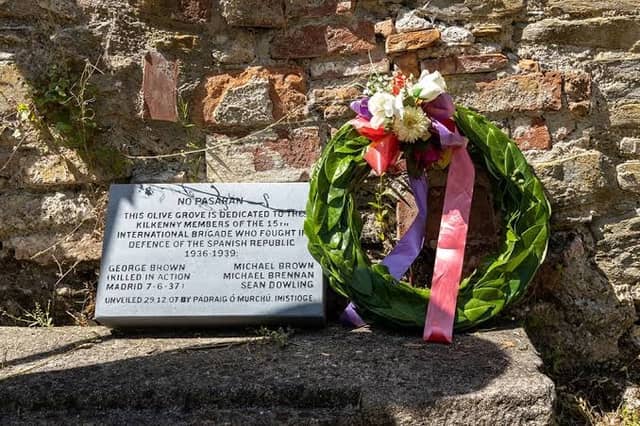
Six months before that first commemoration in 2008, the George Brown Memorial Committee dedicated an olive grove and memorial to all four men who had journeyed to Spain, immortalising them for generations to come.
It reads:
No Pasarán
This olive grove is dedicated to the Kilkenny members of the 15th International Brigade who fought in defence of the Spanish Republic 1936-1939.