Search


28 Feb 2026
Search
28 Feb 2026

Please allow ads as they help fund our trusted local news content.
Kindly add us to your ad blocker whitelist.
If you want further access to Ireland's best local journalism, consider contributing and/or subscribing to our free daily Newsletter .
Support our mission and join our community now.
To continue reading this article, you can subscribe for as little as €0.50 per week which will also give you access to all of our premium content and archived articles!
Alternatively, you can pay €0.50 per article, capped at €1 per day.
Thank you for supporting Ireland's best local journalism!

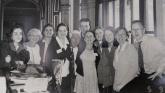
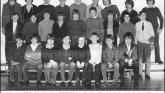
One of O'Mahoney's squad photos from Ipswich Town

As the Irish football team prepares for their World Cup qualifying playoff game in Prague in March, players from across the country will form the squad which hopes to fire the Boys in Green to a first finals since 2002.
There will be no representation for Kilkenny in the squad however as the Marble County haven’t supplied a full international since Seani Maguire’s last cap in 2020.
In fact, to discover Maguire’s Kilkenny predecessor, we have to go all the way back to the 1930s era of pre-war football.
This comes in the form of the now largely forgotten Matt O’Mahoney. Born in Mullinavat in January 1913, O’Mahoney plied his trade for several English clubs and played in seven games for Ireland before the outbreak of the Second World War cut his international career short.
A centre-half, he stood at 6 '2' and arrived at Liverpool FC during a difficult period for the club in 1933 where they finished the First Division season in 14th place. O’Mahoney moved on after failing to make his mark with the Reds, bouncing around local Merseyside clubs before spells at Wolves and Newport also proved unsuccessful.
The Mullinavat man finally found a home at Bristol Rovers however, and enjoyed the best spell of his career after joining in 1936. He would go on to make over 100 appearances for The Pirates, scored six goals and won all seven of his Ireland caps during his time at the club.
In this period, Irish soccer had been split in two with both the Football Association of Ireland (FAI) in Dublin and the Belfast based Irish Football Association (IFA) claiming jurisdiction over the entire island.
It was common therefore for players to be called up by both associations, leading to O’Mahoney winning caps for either team and lining out in Dalymount and Windsor Park.
After impressing in the lower tiers of English football with Rovers, a first FAI XI call-up led to his debut in a 2-2 draw against Czechoslovakia in Prague followed up by a 6-0 defeat at the hands of Poland in Warsaw in May 1938.
The Kilkenny man retained his place in the squad later in September and gained the distinction of being the first Irish international to fly home for a game, arriving from Bristol just an hour before kickoff to give a reportedly excellent performance in a 4-0 win against Switzerland.
O’Mahoney’s solitary IFA XI appearance soon followed in October of the same year, coming in a 2-0 defeat to Scotland at Windsor Park before he was back in the FAI setup the next month for a rematch against the Polish.
The young defender was turning heads through his consistent performances with the matchday programme from the Switzerland game saying that O’Mahoney, “having youth on his side, is considered one of the most promising centre-half backs in the English league”.
The assessment was similarly glowing in the Poland programme which described him as having “all the attributes that make the modern centre-half. Played splendidly last May and again on the successful side against Switzerland”.
The November game against Poland would be O’Mahoney’s last for his country on home soil with the Irish side running out 3-2 winners in a fixture attended by President Douglas Hyde and Taoiseach Éamon de Valera.
O’Mahoney again made the squad in 1939, playing a 2-2 draw in Budapest against a Hungary side that had contested a World Cup final less than a year prior and a 1-1 draw against Nazi Germany in Bremen for his final cap, just over three months before the invasion of Poland marked the beginning of the war.
The outbreak of hostilities came at the worst possible time for the defender, just as his international career was gaining momentum and weeks after a transfer to Ipswich Town in July 1939.
The signing was clearly seen by the media as a coup for the Suffolk outfit with the Gloucester Echo calling it “their biggest capture of the year in securing the transfer of Matthew O’Mahoney, the Irish international centre-half from Bristol Rovers”.
It seems that he had designs on returning to the heights of Liverpool before the war as in an interview with the Liverpool Evening Post he is quoted as saying, “I know Liverpool had representatives watching Ray Warren and myself for several weeks last season and I was hoping they wanted me at Anfield”.
The reporter follows on by commenting, “Yes, and I think it is a pity from the Liverpool point of view. There are few better pivots in the south than O’Mahoney”.
READ NEXT: Kilkenny doctor to appear in RTÉ documentary tonight - Kilkenny Live
The Tractor Boys didn’t enter any wartime leagues so O’Mahoney bounced around clubs as a guest during the war years, including a second spell with Bristol Rovers and also local rivals Bristol City.
He was 26 when the war began and 32 by its conclusion, leading to a loss of what would have been his prime years for club and country. Even so, he became Ipswich’s captain and played almost 100 times for them before his departure in 1949.
The stark contrast in levels of professionalism between now and O’Mahoney’s era is well described in The Men Who Made the Town, an official history of Ipswich, which tells of a humorous mixup after a matchday.
“On the Saturday, a coach was used to take the team on the return journey from Liverpool Street to a match in Brighton. On the way to Brighton it was involved in a slight accident with a tram, and in Brixton on the return journey, it ran into the back of a bus”.
“Having got the coach started again it was discovered that the captain Matt O’Mahoney had got off to buy a paper and been left behind”.
The image of current Ipswich skipper and Ireland defender Dara O’Shea suffering a similar fate to this is pretty farfetched, showcasing the different world that football occupied in the post-war years.
Another example of this is found in a Daily Express article from December 1947 which reads: “Housing situation forces Matt O’Mahoney, Ipswich’s Irish international centre-half, to ask for a transfer. He was married in August and has been unable to find a house”.
He must have been able to have the situation resolved as O’Mahoney stayed at Ipswich for a further two years, before moving on to Yarmouth Town as a player/manager before his eventual retirement.
O’Mahoney died in Norwich in 1992 aged 79, and although the hiatus of the war years stopped him from reaching his full potential, he forever remains a trailblazer as the first Kilkenny man to don the green jersey of Ireland.

Subscribe or register today to discover more from DonegalLive.ie
Buy the e-paper of the Donegal Democrat, Donegal People's Press, Donegal Post and Inish Times here for instant access to Donegal's premier news titles.
Keep up with the latest news from Donegal with our daily newsletter featuring the most important stories of the day delivered to your inbox every evening at 5pm.

This publication supports the work of the Press Council of Ireland and Office of the Press Ombudsman, and our staff operate within the Code of Practice of the Press Council. You can obtain a copy of the Code, or contact the Council, at www.presscouncil.ie, Lo-call 1800 208 080 or email: info@presscouncil.ie.