

'Moderately littered': Kilkenny plummets in latest IBAL rankings

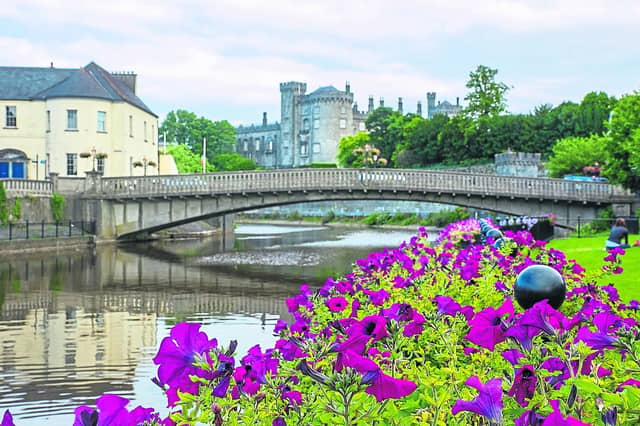

Condition of Collier’s Lane and Bateman Quay in Kilkenny City during recent site visit ‘very much brought down Kilkenny’s overall ranking this time around’
Despite ongoing efforts from community groups and volunteers, Kilkenny City has unfortunately dropped from 17th to 30th in the latest Irish Business Against Litter (IBAL) rankings and has been classified as ‘moderately littered’ close to the bottom of the table.
The poor condition of a small number of specific sites brought down Kilkenny’s ranking in this latest report, which stated that “it is disappointing to see Kilkenny slip from its customary clean stats.”
The IBAL survey stated that “the presence of one dumped upon site (Collier’s Lane) and another heavily littered one (Bateman Quay) has very much brought down Kilkenny’s overall ranking this time around.”
Collier’s Lane wasn’t just casually littered, adudicators added, “but had been subjected to dumping.”
This residential area wasn’t just littered but had been dumped upon. Items were primarily large e.g. bags of rubbish/furniture/bags of rubbish/cardboard boxes etc. with an obvious graffiti presence
The report also noted that a few sites just missed the top litter grade which “could easily be achieved with a little extra care and attention e.g. The Parade and High Street.”
Adjudicators also had some compliments, stating that the “riverwalk was very much deserving of the top litter grade, as was the Aldi Bottle Bank – the latter is particularly well presented, preventing the ‘stuffing’ of items which so frequently occur at similar facilities throughout the country.”
Below are some additional comments about a number of sites in Kilkenny City:
Waterford Approach Road: Grade B. Road/bicycle surfaces were in good order along this route. Some parts were clear of litter but there was a food related presence, along with cigarette butts and plastic ties.
Aldi Bottle Bank: Grade A. The design of this small facility was such that the recycle units were flush against the back and side walls, precluding any opportunity for the ‘stuffing’ of items which so frequently happens at Bring Centres. Signage associated with the use of same was in good order and bin units were freshly presented.
Bateman Quay: Grade C. This site presented poorly. As well as loose litter along the grass, there were some rubbish bags and other items withing the base of planted areas.
Riverwalk: Grade A. The ‘gathering’ area at the bridge has been beautifully laid out with lovely paving/seating/planting/sculpture and solid litter bins. The overall impression was a very good one with regards to litter.
Carnegie Library Car Park: Grade A. All was in good order at this car park with no obvious litter accumulations. The bottle bank within was good with regards to litter.
Collier’s Lane: Grade D. This residential area wasn’t just littered but had been dumped upon. Items were primarily large e.g. bags of rubbish/furniture/bags of rubbish/cardboard boxes etc. with an obvious graffiti presence. Is this area subject to the same cleaning regime as the rest of the town?
High Street: Grade B. The overall presentation of High Street was very good with lovely paving and attractively painted premises. Bollards and litter bins were freshly presented. Main litter items were food related, along with cigarette butts, dog fouling and plastic ties. This could be a top-ranking site, with a little extra care and attention.
The Parade: Grade B+. ‘The Parade’ is beautifully laid out with all elements in very good order. The paving looked great, fresh looking. There were plenty of bins throughout. Seating /planted areas are lovely features. Casually discarded litter took away from an otherwise lovely environment.
Hebron Road Approach: Grade A. A well kept and tidy approach with a well-attended impression particularly around the outside of Nowlan Park and St Kieran’s cemetery.
Lidl: Grade A. A very freshly presented environment, with some nice planting. All elements were in good order. There was a virtual absence of litter throughout.
Below is the IBAL ranking list in full:
Cleaner than European Norms
1. Sligo
2. Monaghan
3. Leixlip
4. Waterford City
T5. Ballinasloe
T5. Carrick on Shannon
T5. Gorey
Clean to European Norms
8. Cavan
9. Killarney
10. Roscommon
T11. Dungarvan
T11. Newbridge
T11. Swords
14. Longford
15. Mullingar
16. Ballina
17. Cork City Centre
18. Navan
19. Ennis
20. Tralee
21. Letterkenny
22. Bray
23. Mahon
24. Athlone
25. Carlow
26. Galway City Centre
27. Drogheda
Moderately Littered
28. Clonmel
29. Fermoy
30. Kilkenny
31. Cork Northside
32. Galway Inner City - Ballybane
33. Dundalk
34. Ballymun
35. Dublin City Centre
36. Tallaght
37. Limerick City South - Galvone
38. Dublin North Inner City
39. Portlaoise
Littered
40. Limerick City Centre
Nationally, no town or city occupied the “seriously littered” or “litter blackspot” categories at the foot of the IBAL table.
Overall litter levels were on a par with last year, with 27 towns deemed clean. Sligo finished ahead of Monaghan and Leixlip, with Waterford – again Ireland’s cleanest city – in 4th spot.
There were significant improvements in Navan, Carlow and Athlone. An Taisce, who conduct the surveys on behalf of IBAL, praised Sligo in particular for its top-ranking approach roads, “exceptionally freshly presented” retail park and the “complete absence of litter” throughout the Great War Memorial Garden.
Continuing a trend of recent years, the majority of socially disadvantaged urban areas improved year on year, with Dublin North Inner City, Cork Northside, Galway’s Ballybane and Ballymun all progressing from ‘littered’ to moderately littered’.
However, Limerick City Centre disappointed, dropping to ‘littered’. An Taisce inspectors lamented the dearth of clean sites within the city centre and the number of sites that are heavily littered on a consistent basis
“As the peak season for tourist visitors approaches, we have fewer littered areas than we’ve had at any time in the last 25 years,” commented IBAL’s Conor Horgan, “and we’re hopeful that we’re on the cusp of a real breakthrough in disadvantaged areas of Dublin and Cork.
“For 15 years we’ve been surveying these areas and for the first time we’re seeing evidence of sustained improvement as a result of greater investment from Dublin and Cork City Councils. If plans in Dublin for the elimination of domestic waste collection in bags across the inner city are realised, we will have a much cleaner capital city.”
Once again, the study showed a low number of very heavily littered sites among the 500-plus sites surveyed compared to previous years.
“The job’s not done, but across the country, local authorities appear to have upped their game when it comes to tackling persistently littered sites and dumping in our towns and cities,” says Conor Horgan.
Plastic bottle and can litter was found in 19% and 22% respectively of sites surveyed – the highest levels since the Deposit Return Scheme was introduced.
“If we had hoped that the DRS would see this litter disappear from our streets, it’s not happening,” says Conor Horgan. “15c or 25c does not appear enough to incentivise some people to return a bottle or can. That said, by reducing this litter by 50%-plus, the scheme’s impact on overall cleanliness levels is beyond dispute.”
The prevalence of coffee cups was at its highest level since 2023, making it one of the main sources of litter on our streets, behind sweet papers, fast food wrappers, plastic bags and cigarette butts.
“Talk of a ‘latte levy’ has all but vanished, yet coffee cup litter clearly has not. The Government inaction on this persistent problem is baffling.”
The study also revealed a significant increase in cigarette butt litter compared to 2025. IBAL warns that butts are not only unsightly but are a toxic single-use plastic that contaminate the marine and land environment.
An Taisce receives funding from the Department of Climate, Energy and the Environment (through the Circular Economy Fund) to support the undertaking of IBAL surveys.