
The woman was conveyed to University Hospital Limerick for treatment of serious injuries. She was pronounced deceased yesterday evening.
Search


01 Apr 2026

Please allow ads as they help fund our trusted local news content.
Kindly add us to your ad blocker whitelist.
If you want further access to Ireland's best local journalism, consider contributing and/or subscribing to our free daily Newsletter .
Support our mission and join our community now.
To continue reading this article, you can subscribe for as little as €0.50 per week which will also give you access to all of our premium content and archived articles!
Alternatively, you can pay €0.50 per article, capped at €1 per day.
Thank you for supporting Ireland's best local journalism!


A further two to three weeks of war in Iran is too long, Ireland’s premier and deputy premier have said.
Taoiseach Micheal Martin and Tanaiste Simon Harris warned of the consequences to the world’s energy supplies in response to comments by US President Donald Trump overnight.
Mr Trump said he could walk away from the war in two to three weeks without a ceasefire if he felt confident Iran would not be able to build a nuclear weapon.
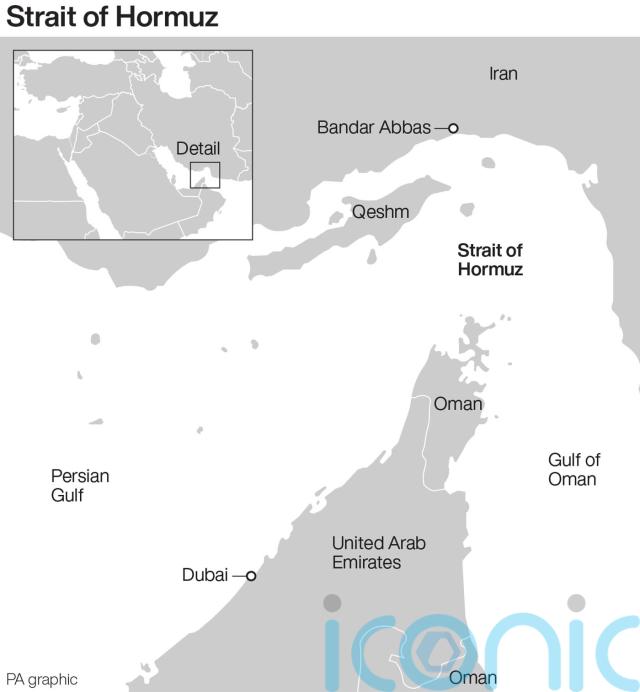
The US and Israel began bombing Iran on February 28, after which the Iranians began an effective blockade of vital trading route the Strait of Hormuz, disrupting energy and fuel supplies.
Asked if he would be giving an address to Irish citizens about the energy crisis, following similar addresses by British Prime Minister Sir Keir Starmer and Australian Prime Minister Anthony Albanese, Mr Martin said: “We won’t be doing one today, but obviously we’re keeping everything under review.”
Mr Harris, who is also Ireland’s finance minister, warned that in just over four weeks the scale of damage to the world’s energy infrastructure has been significant.
Speaking outside Government Buildings, Mr Harris said that two to three weeks “might sound like a relatively short period of time”, but the economic and humanitarian impact would be “extraordinarily concerning”.
“The war is currently ongoing for about 33 days, look at the scale of damage that has been done to the world’s energy infrastructure in that period of time,” he said.
“We don’t have another 21 days, or thereabouts, to see de-escalation.
“We’re already living through the largest energy crisis in the history of the world, bigger than the last three combined.”
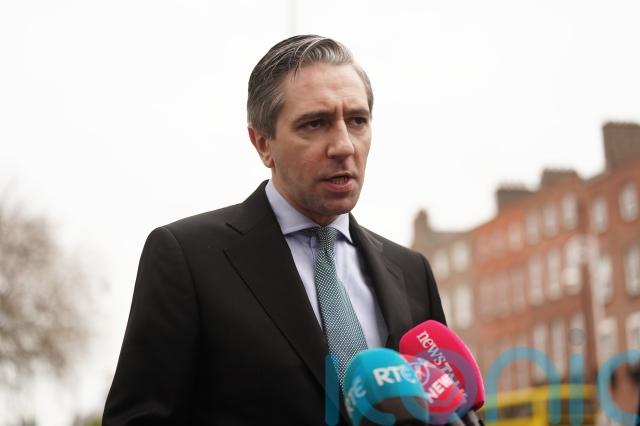
Mr Martin said two to three weeks was “too long” and said the Irish government was pressing for “as early an end to this as possible”.
“There is simply too much volatility around this war,” he said.
“The sooner this ends, I think, the sooner we see de-escalation across the region, then the greater the prospect of restoring some degree of normality, although it will take a considerable degree of time.”
Asked if they were concerned about reports that prices at petrol pumps are rising again, despite last week’s cut to excise duty, Mr Harris said he believed the cuts were passed on to consumers.
He said: “Diesel and petrol prices are still below where they were in advance of the excise cuts.
“So imagine how much higher they would have been had those measures not been put in place, so I do believe they were the right measures to take.”
Mr Martin said the situation is “very, very volatile” and added “the only certain way” to stop prices rising is “to end the war”.
Mr Harris said the European Commission is working on “advice and maybe a toolkit” containing “sensible ideas that might be offered to the public”, which is expected to be made available next week.
Asked if the government would be issuing advice to citizens to work from home, the Tanaiste said “the level of government advice” would depend on how long the war goes on for “because every day it goes on, the energy supply crisis worsens”.
He said measures, such as those taken during the Ukrainian crisis, where lights on public buildings were not turned on at night, are “under review”.

Subscribe or register today to discover more from DonegalLive.ie
Buy the e-paper of the Donegal Democrat, Donegal People's Press, Donegal Post and Inish Times here for instant access to Donegal's premier news titles.
Keep up with the latest news from Donegal with our daily newsletter featuring the most important stories of the day delivered to your inbox every evening at 5pm.

This publication supports the work of the Press Council of Ireland and Office of the Press Ombudsman, and our staff operate within the Code of Practice of the Press Council. You can obtain a copy of the Code, or contact the Council, at www.presscouncil.ie, Lo-call 1800 208 080 or email: info@presscouncil.ie.